Sound Ecologies vol. II
GENERAL INFO
- LED BY
-
Yuri Tuma
- DATES
-
Wednesdays, from November 4 to 25, 2026
- TIME
-
6:00 – 8:00 PM (CET)
- FORMAT
-
4 online sessions via Zoom
- LANGUAGE
-
English
- FULL TUITION
-
€ 250
- DISCOUNT
-
20% for students & IPS alumni
As visual cultures accelerate within capitalist societies, propelled by social media and the proliferation of AI-generated content or slop, forms of resistance rooted in listening practices are also emerging. This suggests a growing turn toward the aural sensorium, as individuals and communities expand the ways we listen, attend, and imagine otherwise.Listening sessions around the globe are appearing as ways of being together within a new attention economy, one that fosters connectivity through shared acoustic experience rather than the rapid hyperconnectivity produced by screen-based technologies and highly visual spectacles.
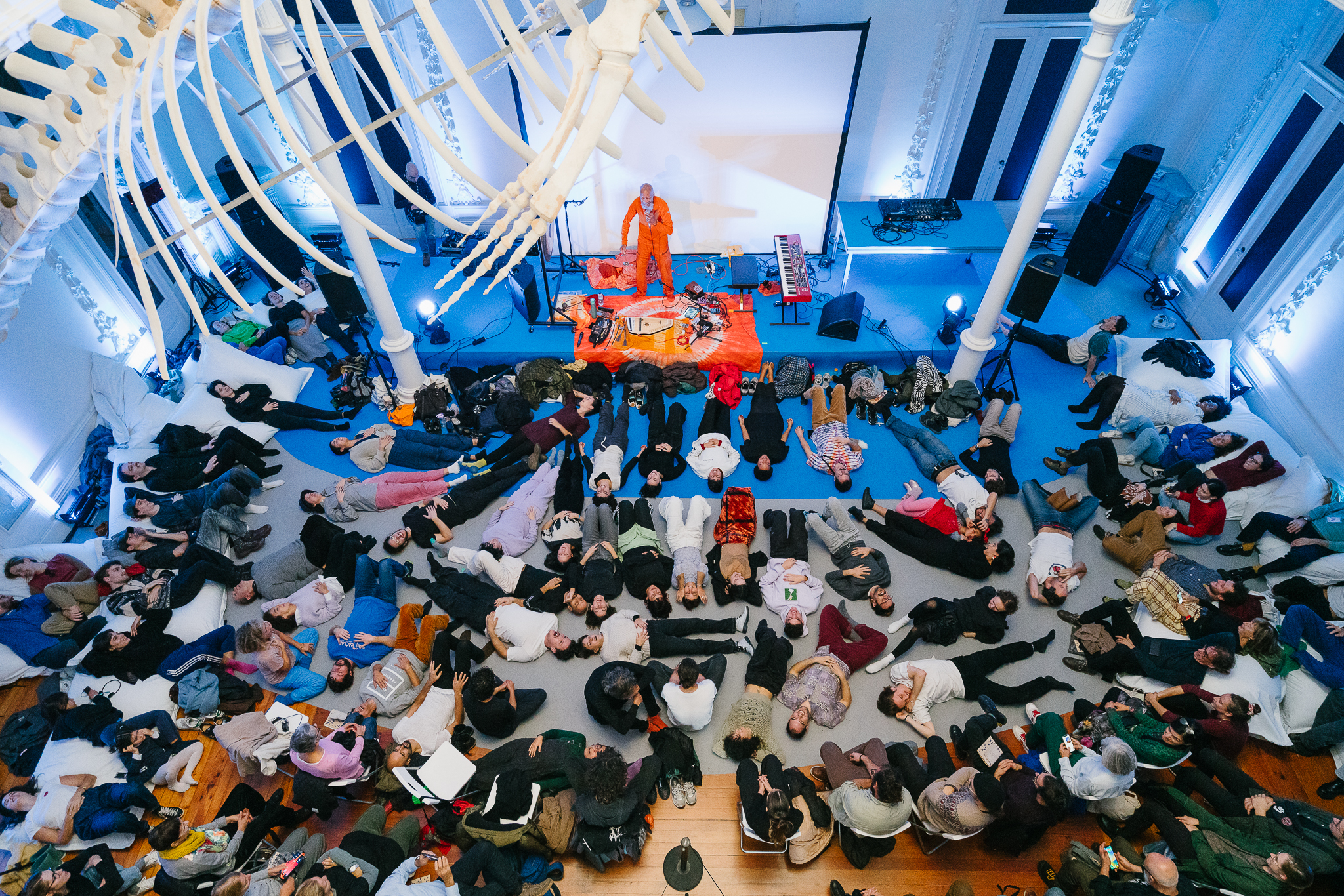
The Listening Affect, IPS, 2023
ABOUT
Sound ecology invites us to center the sonic complexities of the planet within ecological discourse. What difference emerges between seeing an image of an extinct bird and listening to its final recorded song? How might our engagement with ecological crisis, individually and collectively, shift if we listen to the sounds of the issues we are so often confronted with, rather than encountering them primarily through data and images? What kinds of ecological narratives become possible when sound is positioned as a protagonist, opening space for the radical imagination of systems that actively care for what is said, heard, and silenced?
VOLUME II
In this second volume* of Sound Ecologies, we will continue opening not only our ears, but also our minds and bodies to the expansive possibilities that sonic experience offers to contemporary artistic practice and research. This is conceived as an experimental space for knowledge sharing, where we will engage in active listening through curated playlists, explore diverse theoretical approaches to sound ecologies, and practice guided visualizations alongside collective and individual writing. Together, we will experiment with ways of creating new spaces and temporalities for attending to that which demands sustained attention, while practicing and exercising active and conscious decisions of care for what we listen to.
- *
-
*You do not need to have taken Volume 1 to participate in this seminar. This edition continues the series with all-new, independent content.
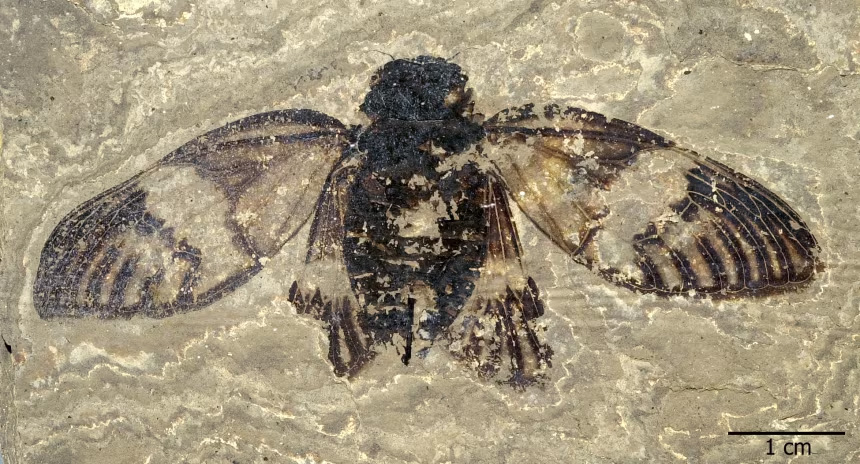
Cicadas are among the earliest known organisms to produce sound for communication.This fossil was found in the Messel Pit in Germany, in rocks that are approximately 47 million years old. Image from CNN Science News.

When aircraft fly faster than the speed of sound, shockwaves travel away from the vehicle, and are heard on the ground as a sonic boom. NASA researchers use this imagery to study these shockwaves as part of the effort to make sonic booms quieter, which may open the future to possible supersonic flight over land.
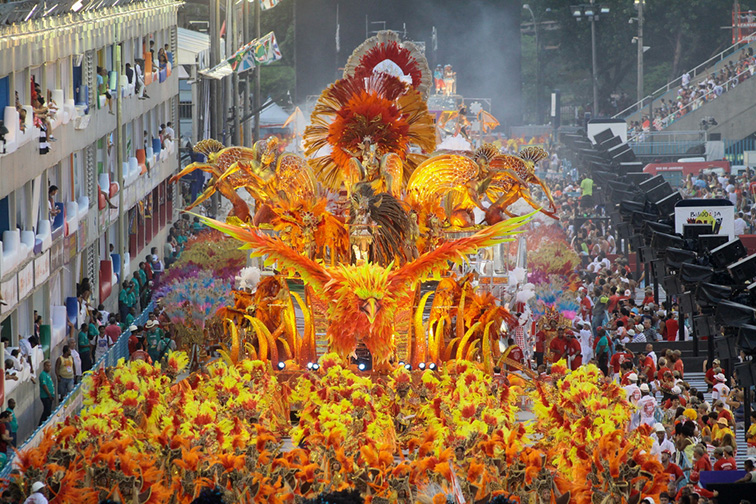
Samba schools perform at the Sambadrome on Marquês de Sapucaí in Rio de Janeiro during the first day of parades.
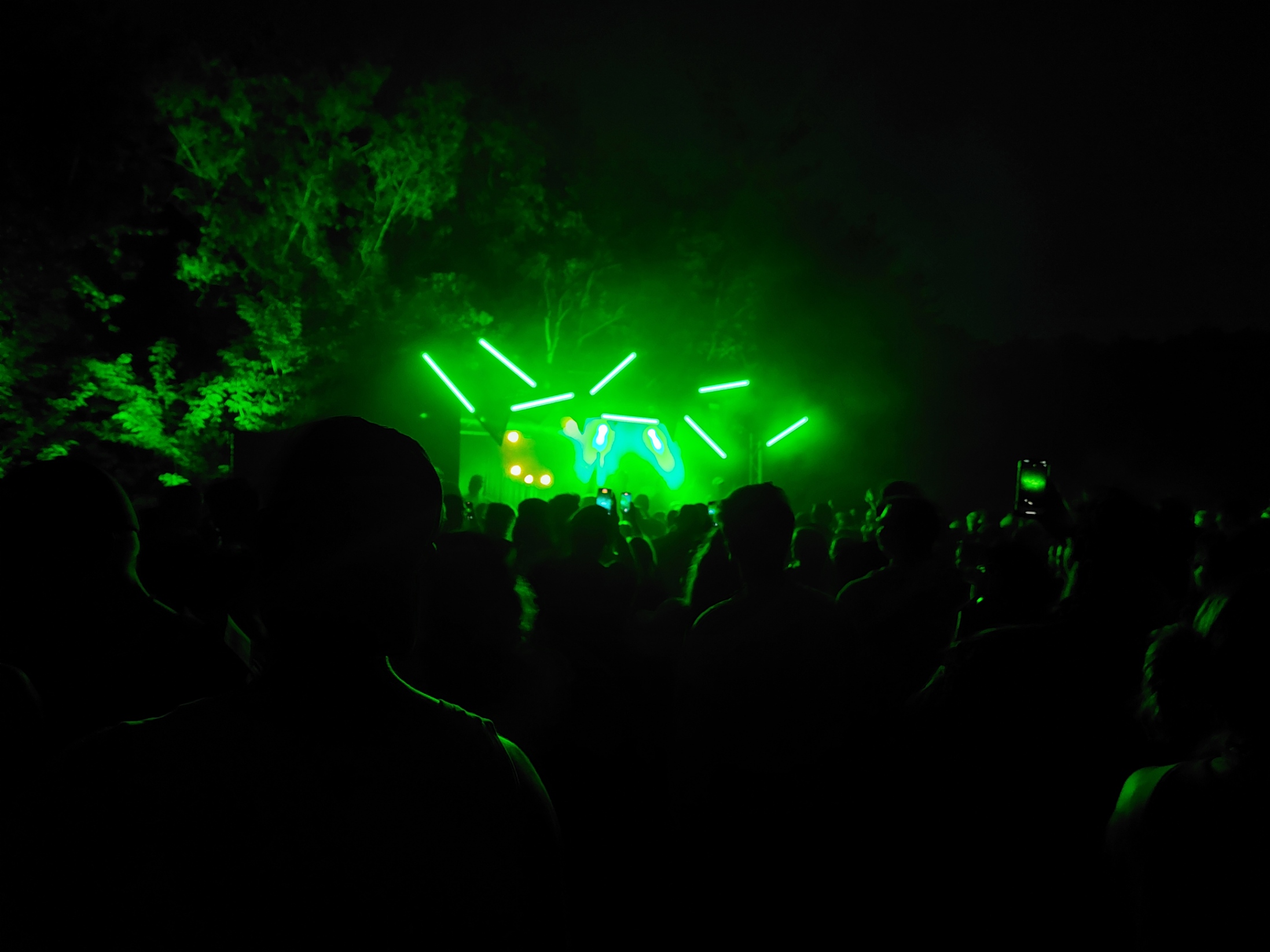
Rave and nightlife culture have long been a sonic queer safe space where different and dissident identities find community and expression.
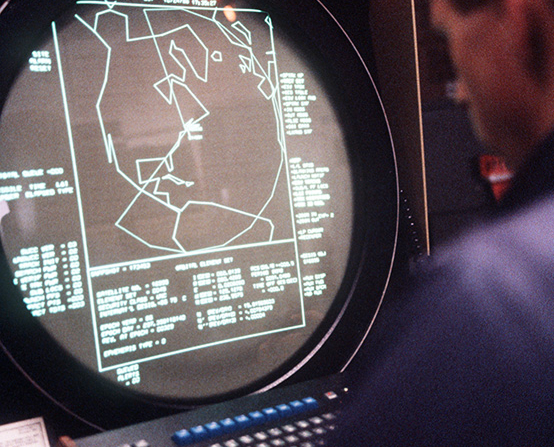
Much of the technologies of listening and audio recording today are derived from military advancements, making it a critical historical fact for sound studies. In this photo, Staff Sgt. Paul Brawner of the 6th MISSILE Warning Squadron studies a RADAR screen for the AN-FPS-115 Pave Paws phased array warning system RADAR. The system is designed to detect MISSILEs launched at North America from submarines operating in the Atlantic Ocean.

Urban sound contamination has a major impact on our physical, mental and emotional wellbeing. Recent scientific studies link mental health to the sonic frequencies that shape a cityscape. Photo of traffic light trails in LA by: Kyle Murfin.
SESSIONS
Session I - Phonocene pt. 2 - Extractivist Listening, Aural Temporalities and Sonic Spirituality
04/11/2026
Many urban narratives tell us that we will find silence in nature, but this claim often silences the complexity of the natural environment itself. Silence may be one of those concepts that, like nature or human, requires continual revision and multiple definitions. Certain listening technologies and sonification algorithms have allowed us to engage with what was previously inaudible, but how should we listen when a distinctly human technology mediates these sensory encounters? What are we hearing when we “listen” to plants or fungi, as many emerging sound art practices invite us to do through technologies of vibration? Can field-recording technologies escape their extractive tendencies? And can artificial intelligence truly make us believe that we are listening to an extinct animal?
Session II - Animal Song? Technologies of Relation and Anthropocentric Musical Aesthetics
11/11/2026
The capacity to sing is often defined through an anthropocentric lens that reinforces regulated qualities rooted in Western academic aesthetics and traditions, such as harmony, rhythm, melody, texture, and form. While composers have long drawn from birdsong, why are birds recognized as singers while other animals are not?Many artistic and scientific engagements with the vocal or embodied expressions of nonhuman animals remain unidirectional, reproducing extractive dynamics that position the human as interpreter and the animal as source. Focusing on avian kinships, this session considers how recording technologies and algorithmic analysis shape interspecies listening and its digital ethics. It asks what practices might enable more reciprocal forms of communication, and what new sonic and relational possibilities might emerge between human and nonhuman listeners and song-makers.
Session III - Queer Listening: Towards a More-than-human Acoustic Entanglement
18/11/2026
Thinking through the sounds that shape gender norms, often entangled with specieist logics, the idea of “sonic gendering” emerges as a critical tool. In a visual, image-driven culture, attentive listening can become a queer practice of resistance. Together, queer ecologies and sound ecology invite us to perceive the world as an entangled network where boundaries blur between human and nonhuman, natural and cultural, male and female, visible and audible.
Session IV - Sonic Climate Fiction: Other Ways of Sensing with our Imagination
25/11/2026
When we imagine a sound or read about it, do we truly hear it? Expanding the ways we listen begins with asking what sound is. Is it only the friction of matter vibrating at frequencies our ears and bodies can detect, or can it also be the resonance of memory, emotion, fiction, and anticipation within us? In this session, we will explore how imagined sounds come alive through storytelling and shared listening practices. Sonic narratives can attune us to private resonances, cultural soundscapes, and acoustic experience, opening new possibilities for how we listen and tell stories.

The sound of dinosaurs is one of the most widely recognized sonic speculations in popular Western culture. Films such as Jurassic Park have shaped a powerful sonic imaginary, one grounded less in archaeological evidence than in the affective impact of sound on audiences. Still from Jurassic Park, Universal Studios.
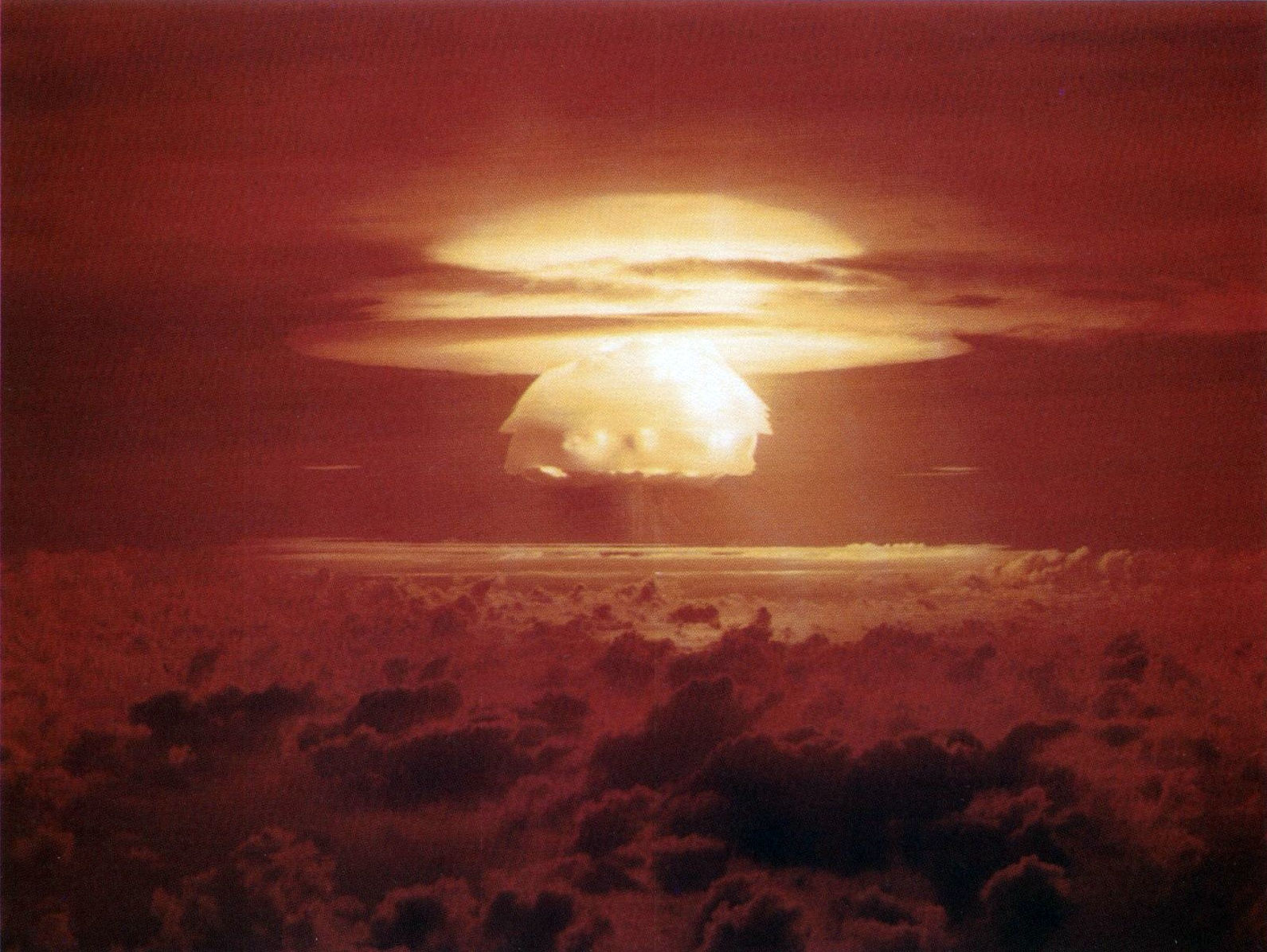
An atomic bomb is one of the loudest human-made sounds, generating an estimated 240 to 280 decibels at close range. Nuclear weapon test Bravo (yield 15 Mt) on Bikini Atoll. The test was part of Operation Castle. The Bravo event was an experimental thermonuclear device surface event.
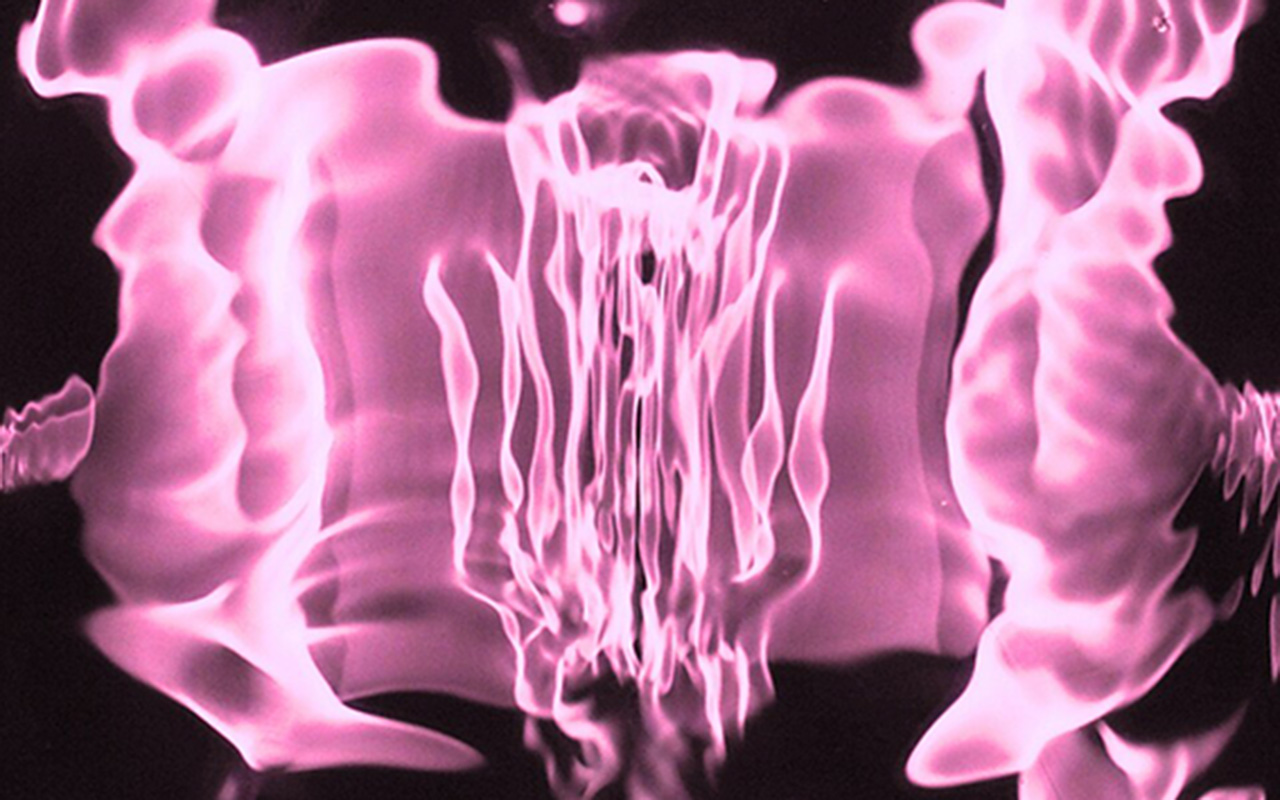
Water under triangular 11Hz vibration

The sonic contamination produced by extractive machinery makes it a critical environmental acoustic hazard to marine ecosystems. Underwater drilling, taking place in the Solent, just off the entrance to Portsmouth Harbour, Portsmouth, Hampshire in February 2012.
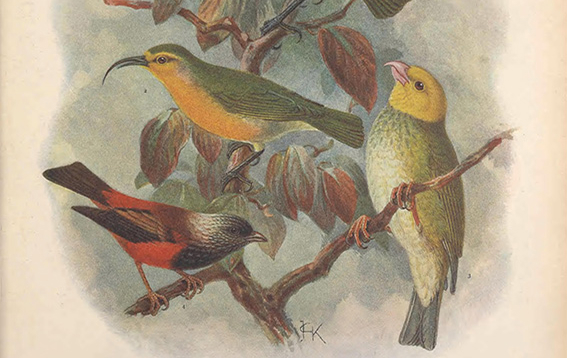
Extinct birdsongs: 1. Hemignathus ellisianus; 2. Heterorhynchus lucidus; 3. Psittirostra psittacea deppei; 4. Ciridops anna
BIBLIOGRAPHY
-
01.
Despret, Vinciane. Living as a Bird. Cambridge: Polity Press, 2016.
-
02.
Schafer, R. Murray. The Soundscape: Our Sonic Environment and the Tuning of the World. Rochester, VT: Destiny Books, 1994.
-
03.
Gumbs, Alexis Pauline. Undrowned: Black Feminist Lessons from Marine Mammals. Emergent Strategy Series, Vol. 2. Chico, CA: AK Press, 2020.
-
04.
Haskell, David George. Sounds Wild and Broken: Sonic Marvels, Evolution’s Creativity, and the Crisis of Sensory Extinction. New York: Viking, 2022.
-
05.
Oliveros, Pauline. Deep Listening: A Composer’s Sound Practice. New York: iUniverse, 2005.
-
06.
Carlyle, Angus, and Cathy Lane, eds. On Listening. Devon: Uniformbooks, 2013.
-
07.
Eckhardt, Julia, ed. Grounds for Possible Music: On Gender, Voice, Language, and Identity. Berlin: Errant Bodies Press, 2016.
-
08.
Mustill, Tom. How to Speak Whale: A Voyage into the Future of Animal Communication. London: William Collins, 2022.
-
09.
Revell, Irene, and Sarah Shin, editors. Bodies of Sound: Becoming a Feminist Ear. Silver Press, 2024
-
10.
Wark, McKenzie. Raving. Duke University Press, 2023.
-
11.
Bernd Brabec de Mori, Matthias Lewy. Miguel A. García Sudamerica y sus mundos audibles, Cosmologías y prácticas sonoras de los pueblos indígenas.
-
12.
Goodman, Steve. Sonic Warfare: Sound, Affect, and the Ecology of Fear. MIT Press, 2009.
-
13.
Eshun, Kodwo. More Brilliant Than the Sun: Adventures in Sonic Fiction. Quartet Books, 1998.
-
14.
Podcasts: Feminist Sonic Futures, What do Sounds Want?, Sonic Acts, Emergence Magazine
FACULTY
-
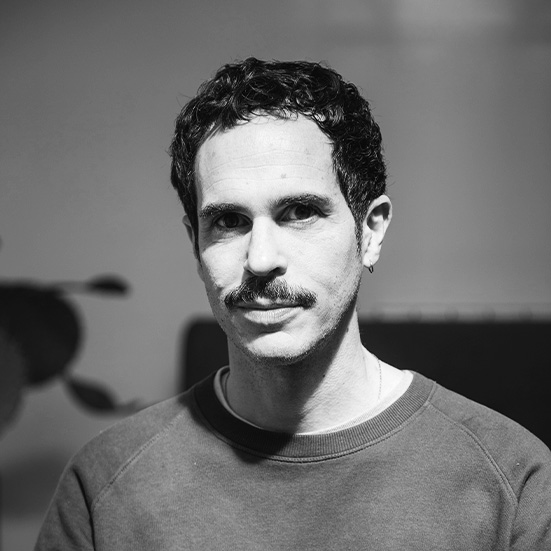
YURI TUMA

Yuri Tuma is a multidisciplinary Brazilian artist living in Madrid, where he co-founded the Institute for Postnatural Studies and practices as its Academic and Artistic Co-Director. Yuri’s work focuses on the investigation of contemporary narratives related to sonic and queer ecologies through collective practice, active listening, sound art, installation, and performance. In early 2020, he co-founded the Institute for Postnatural Studies (IPS) in Madrid, a platform for critical thought and a collaborative network of artists, researchers, curators, and thinkers engaged with the complexities of the ecological crisis. In addition to participating in residencies and coordinating workshops around interspecies kinships and sound ecologies, Yuri has worked with educational and mediation programs at Spanish and international institutions such as Museo Nacional Centro de Arte Reina Sofía, Matadero Madrid, HEAD Géneve, Berlinale, Fundación Mar Adentro, School of Commons, among others. Within IPS, he also actively shapes the editorial route of Cthulhu Books, an editorial platform to showcase the political potential of imagining new worlds and possible stories for the planet through academic and artistic research.