POSTNATURAL INDEPENDENT PROGRAM 2027
GENERAL INFO
- DATES
-
From January 18th to June 12th, 2027 (6 months)
- FORMAT
-
Hybrid. Online sessions and 2 in-person encounters in Madrid
- LANGUAGE
-
English
- TUITION
-
2,500 € — scholarships available (details, below)
- APPLICATIONS
-
Open until November 15th, 2026
ABOUT
The Postnatural Independent Program (PIP) offered by the Institute for Postnatural Studies (IPS) is a hybrid learning space that offers theoretical tools, embodied learning, community building spaces, and expertise to define and examine postnature as a framework for contemporary creation. The PIP offers an experimental platform for ecological thinking and cultural initiatives in an expanded virtual campus, approaching the participants' potential from a holistic mediation. It also brings together established researchers and art institutions that will host guest lectures, working sessions, and activations.
The program is structured in 3 online modules, accompanied by renowned international thinkers, artists, curators, and philosophers, complemented by collective practice laboratories, collective sharing spaces and two in-person encounters in Madrid in which the cohort will share their investigation and practice in a safe environment and engage with the local cultural landscape.
Six months of ecological thinking, artistic practice, and collective transformation
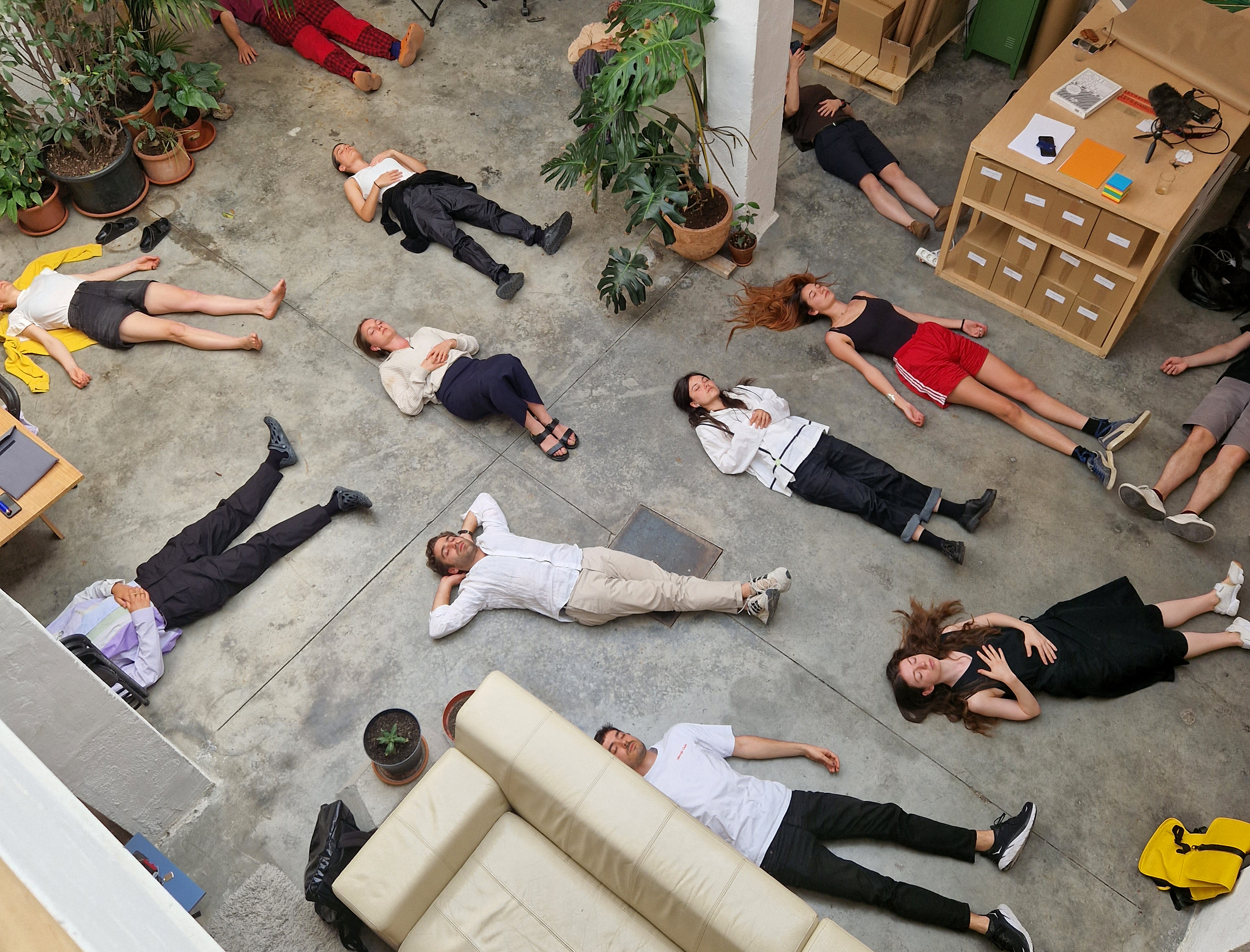
Collective listening session during PIP 2023 at the Institute for Postnatural Studies
FOR WHOM
The PIP is addressed to a diversity of profiles in terms of education, experience, and aspirations: candidates from both art and theory, curators, philosophers, designers, scientists, researchers, educators, mediators or anyone interested in exploring contemporary ecological debates. It is oriented to those with a preconceived context/knowledge of these themes and willing to expand their theoretical background and research methods.
Approximately 30 participants are selected based on their profiles and research interests. The selection is based on experience and intent, and its adequacy with the main lines of the program. Group diversity and coherence is attempted in this process. It is advisable to have a medium level of English, oral and written.
Grow alongside peers from art, theory, design, science, and beyond.
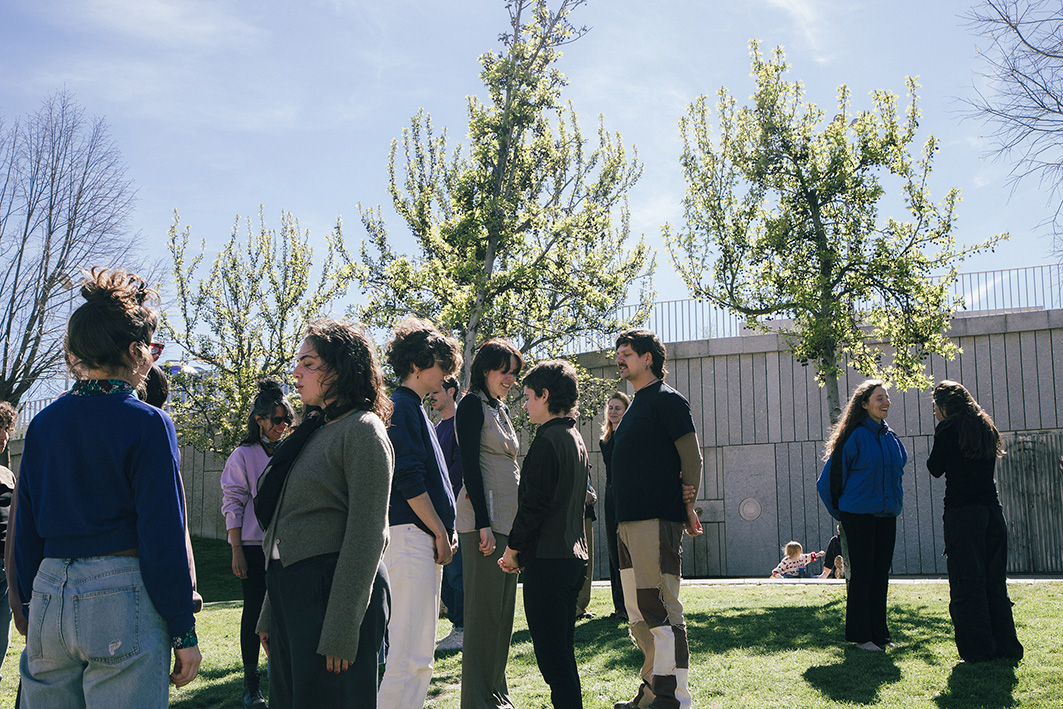
PIP 2026 second In-person Encounter
CONCEPTUAL FRAMEWORK
This program revolves around the concept of postnature, offering an ecology of diverse perspectives around contemporary political, social, economical, and aesthetic issues. It functions as a debate platform from which to investigate, problematize, discuss and multiply new approaches to artistic and thought practices through the exploration of more-than-human ethics that contribute to the definitive dissolution of the nature-culture binomial in all its sequels, variants and consequences.
The idea of a romanticized nature as a background scenario or neutral framework where human activity simply takes place is no longer valid and must be replaced by a broader and more complex reflection. From a critical perspective, we must deepen into the various layers, hybrid codes, and entanglements that compose it. The environment can no longer be read only as a resource to be managed, nor as a set of given circumstances to which we must adapt, but as one of the main cultural-material constructions of modernity.
The program also navigates concepts such as the Anthropocene or the Chthulucene in its multiple meanings and implications, ecological parliaments and perspectivism, colonialism and the necropolitics associated with human and non-human “resources”, new materialisms, sound ecologies, ecofeminisms, and queer theories. Through practical and critical sessions, the goal is to articulate a change of perspective allowing for the proliferation of voices and points of view reflecting on the problem of nature in the contemporary moment.
REGISTRATION CALENDAR
The course runs from January 18th, 2027 to June 12th, 2027, and has approximately 150 hours divided into 3 modules.
Open call: From September 22nd to November 15th, 2026
Review of applications: From November 16th to November 30th, 2026
Notification of selected applicants: December 1st, 2026
Enrollment: From December 2nd, 2026 to January 6th, 2027
A program where philosophy meets ecology, art becomes collective practice, and theory meets embodiment
PROGRAM METHODOLOGY
The PIP approaches learning through an interdisciplinary lens, exploring a variety of formats. The Theoretical Modules take place online and include conversations, lectures, and experimental embodied exercises led by IPS faculty and guest speakers. Each session is accompanied by reading materials, shared in advance, encouraging participants to situate ideas within broader cultural, political, and ecological frameworks.
To nurture a continuous Collective Sharing, the program provides space for participants to connect with one another and with their practices through individual and group methodologies, all within a safe and supportive environment. Peer-to-peer learning is considered a central part of the program: participants are encouraged to bring in their own references, contexts, and questions, making the cohort itself an active source of knowledge and inspiration.
As a way of cultivating artistic and personal explorations, the PIP hosts open Laboratories in which participants engage in collective creative practices. Over the years, these opportunities have revealed themselves as fertile grounds for meaningful exchanges where thinking, feeling, and acting together strengthen bonds and artistic inquiry. The PIP embraces a malleable and porous approach to learning, valuing not only the knowledge shared but also the possible kinships and futures that can emerge in the process.
Lastly, the Institute for Postnatural Studies, in collaboration with a local cultural institution, hosts two In-Person Gatherings in Madrid to deepen the connections and practices initiated online, but also as a way for the participants to engage with the cultural landscape of the city. While attendance is not required, it is highly encouraged.
PREVIOUS EDITIONS
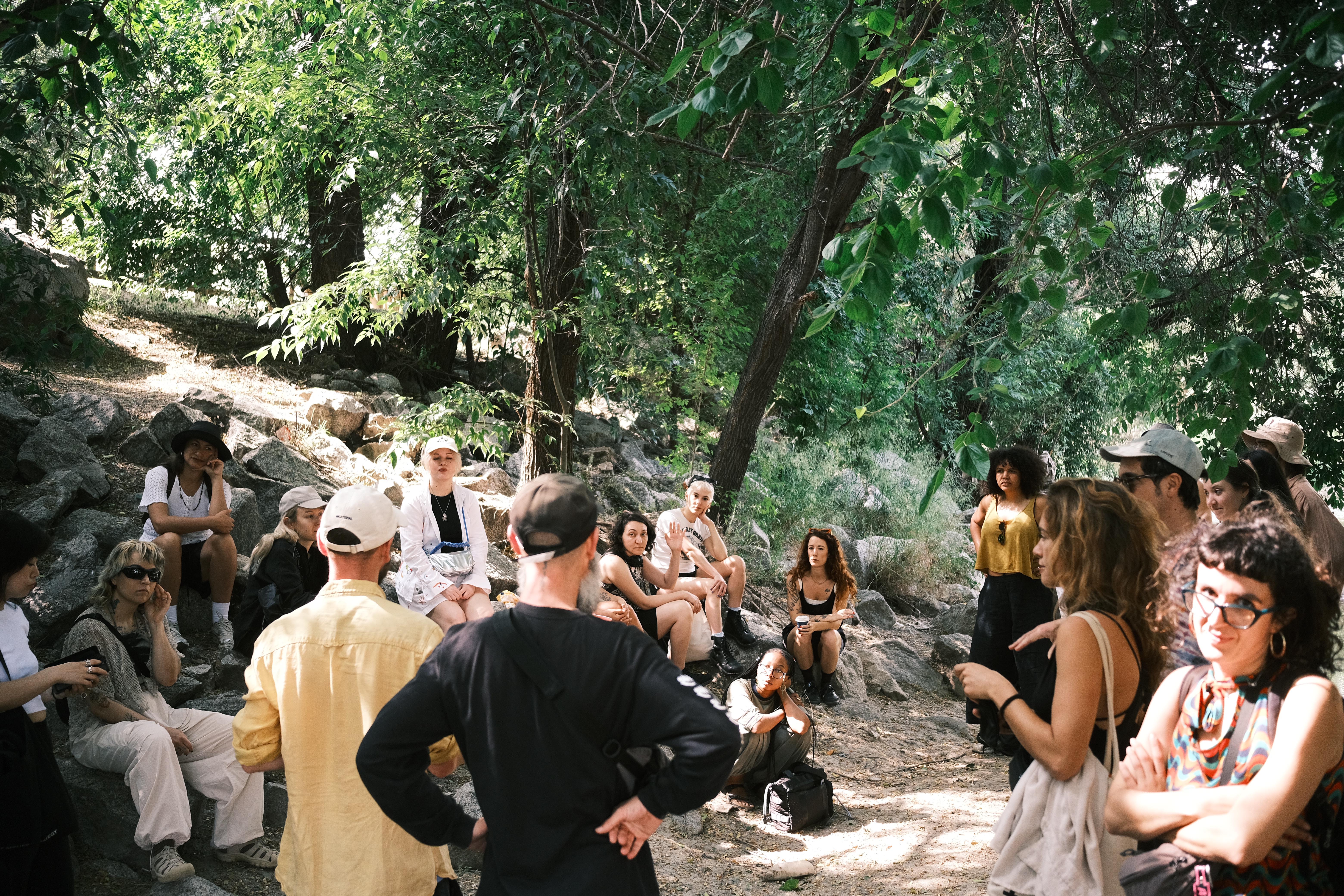
Sensing the Unheard workshop led by Tom Fischer and Simon Williams during the PIP 2025 second In-person Encounter
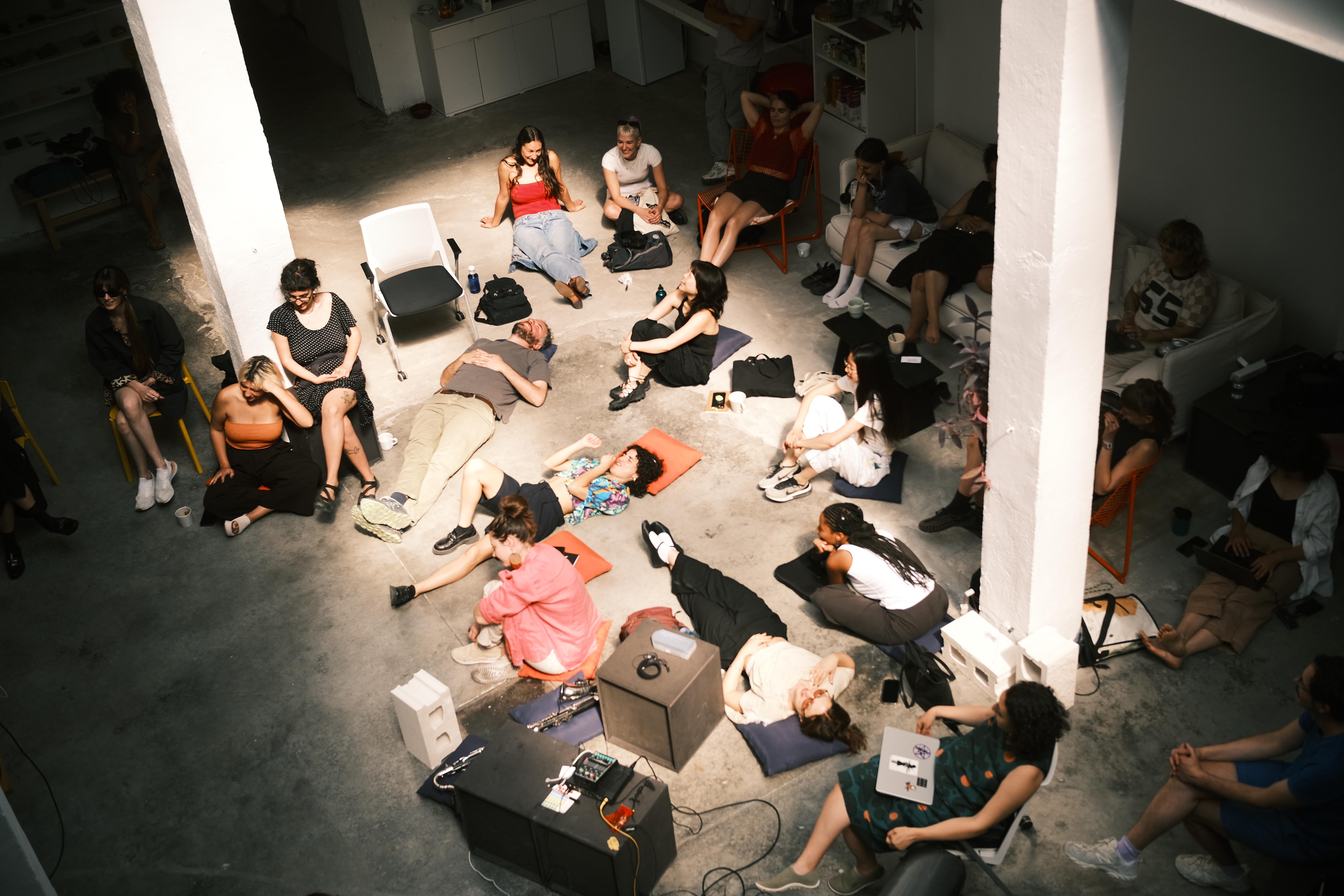
Listening session with Tom Fischer and Simon Williams during the PIP 2025 second In-person Encounter
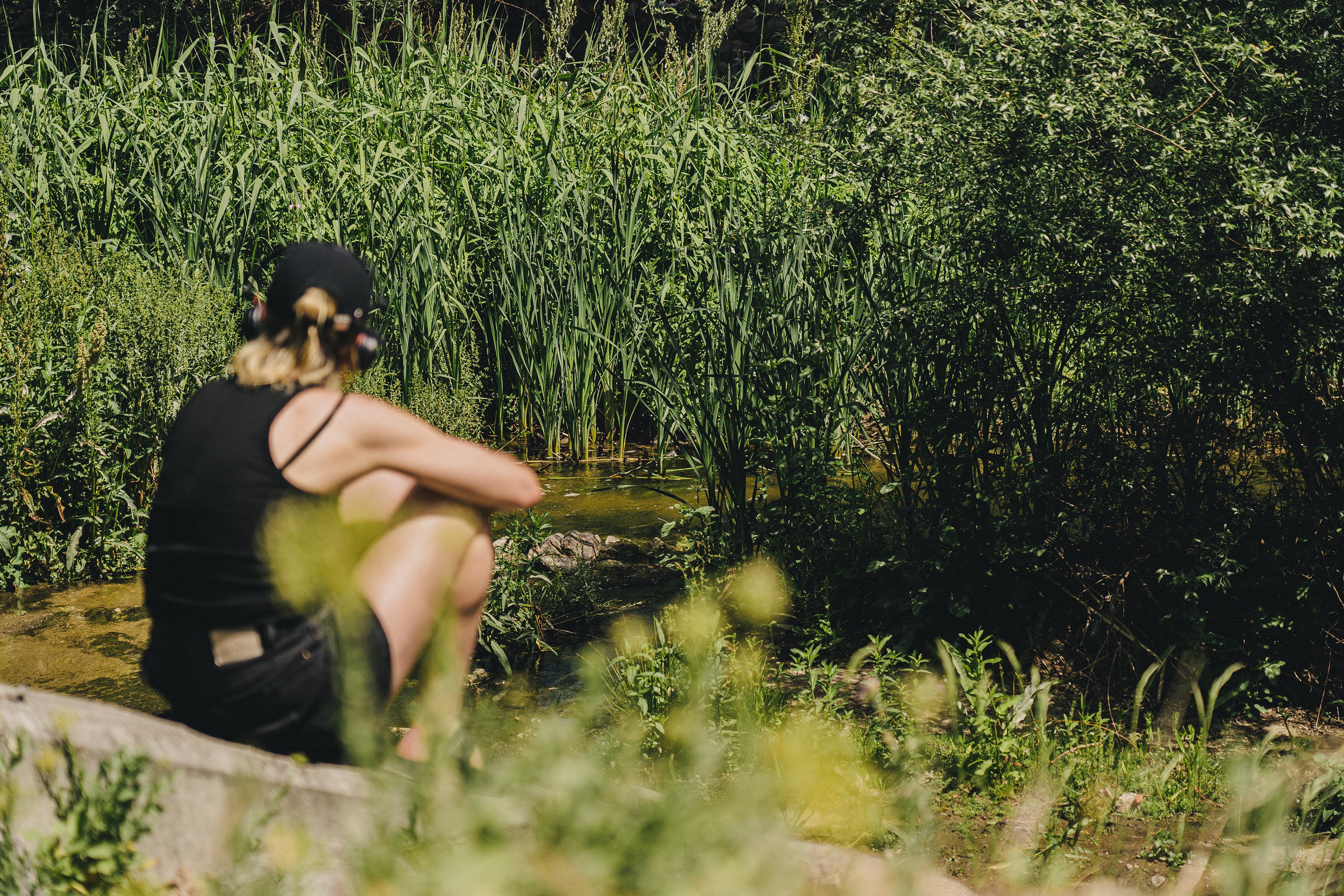
Collective practice Laboratories at the Manzanares river during the PIP 2023 second In-person Encounter. Photo by María Eugenia Serrano
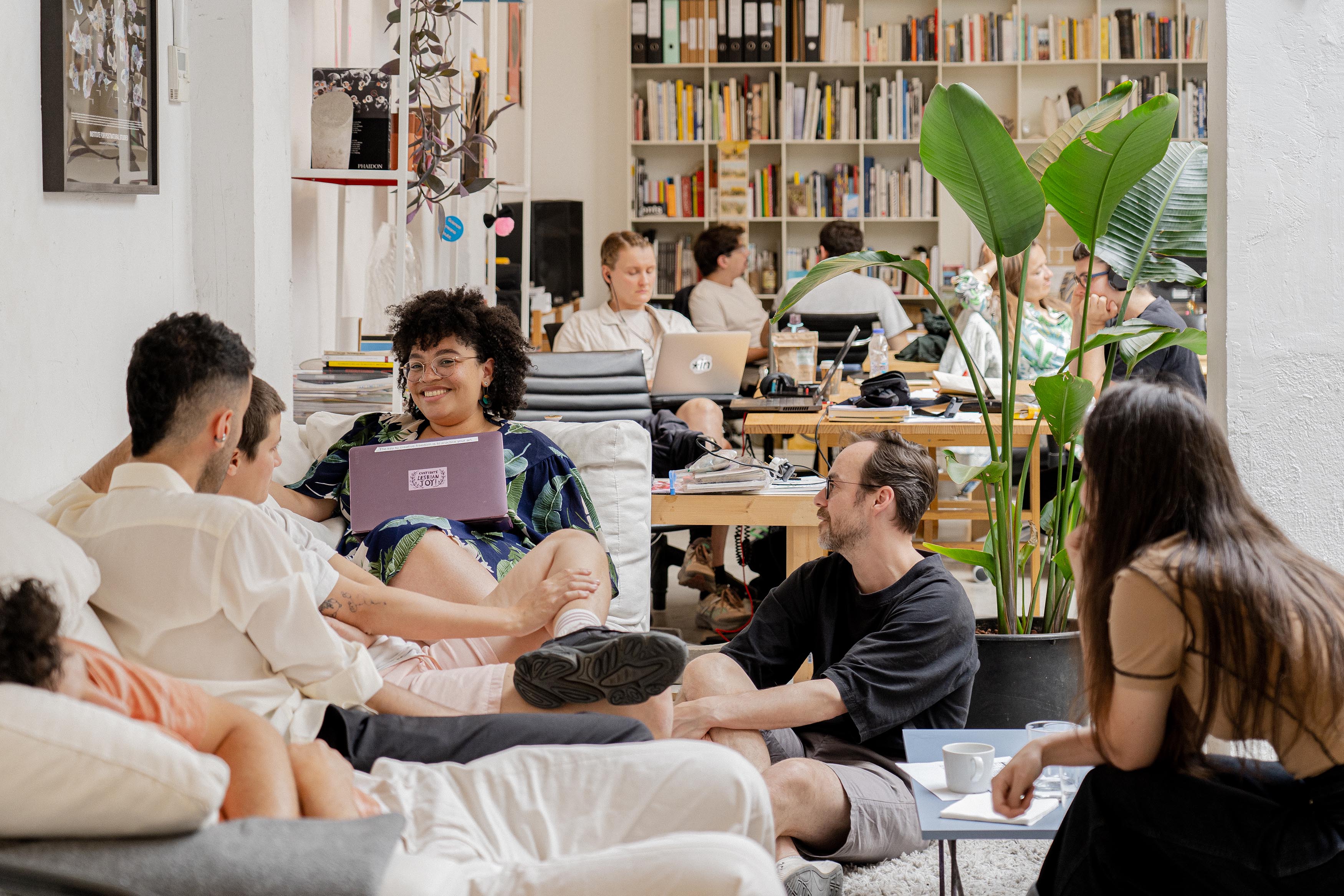
Collective sharing at the IPS headquarters during the PIP 2023 first In-person Encounter. Photo by María Eugenia Serrano
Hybrid learning: 3 online modules + 2 in-person encounters in Madrid
THEORETICAL MODULES
- 01.
- 02.
- 03.
LABORATORIES
Participants' projects and ideas are shared and discussed within the group, fostering conversations that encourage the cross-pollination of research expressions and contemporary interests. The PIP invites practices to be enriched, transformed, and reinterpreted within a permeable environment that promotes the sharing of both theoretical and emotional knowledge. The constellation of methods, expertise, experiences, and situated perspectives that the group brings together creates fertile ground for generating content that responds to present urgencies, fosters meaningful dialogue, and cultivates potential kinships within and beyond the PIP community.
In line with the program's commitment to collective creation, the cohort engages with IPS' podcast platform, Tender Radio, as a space to explore collaborative audio practices. Tender Radio is a research methodology that places radiophonic practices, sound art, and listening at its core, focusing on the oral potential of knowledge sharing and the emotional exchange within text-based academic structures. It is a space to cultivate collective audio practices and experimental sound pieces that can help flourish different worlds and possible futures by engaging senses beyond the visual. Some of the programs are a collaboration with international curatorial programs, while others have been collectively created as part of the Postnatural Independent Program in partnership with La Casa Encendida Radio and Radio Relativa.
For the 2027 edition of PIP, we will collectively explore world-making practices and their potential to imagine alternative temporalities, social structures, political systems, and bodily relations and forms of existence: worlds to be built, transformed, or undone. Participants may experiment with storytelling, interviews, music, sound, or other formats that emerge from the group's curiosity and methods within the year’s theme. Previous editions offer examples of how diverse approaches can converge into rich collective outcomes.
PIP 2027: After Earth: Exercises in planetary imagination and collective world-making
For the 2027 edition of PIP, we will collectively explore world-making practices and their potential to imagine alternative temporalities, social structures, political systems, bodily relations, and forms of existence: worlds to be built, transformed, or undone. This is an invitation for each participant to expand their practice through the radical possibilities of collective storytelling.
Before engaging in world-making, however, we will engage in planet-forming methodologies—freeing ourselves from Earth’s territorial, gravitational, and compositional constraints to create from planetary and cosmological perspectives. Once these planets take shape and we understand their conditions, a central question emerges: What kind of world do we want to place upon them?
Contemporary thinkers such as Denise Ferreira da Silva, Judith Butler, Marta Segarra, and Emanuele Coccia, among others, have insisted on the political urgency of imagination. Yet imagination alone is not enough; it must be grounded in history, community, intimacy, respect, ancestral knowledge, diversity, listening, and care. Here, narratives become forms of resistance against dominant discourses of individualism, endless growth, patriarchy, and colonialism.
But what lies between imagination, planet-forming, and world-making? Perhaps it is practice. This year, we invite participants to channel their creativity into ecological storytelling rooted in their ongoing research and projects. Through workshops and collective methodologies, we aim to generate new narratives based on empathy and collaboration, cultivated within an experimental and supportive academic space.
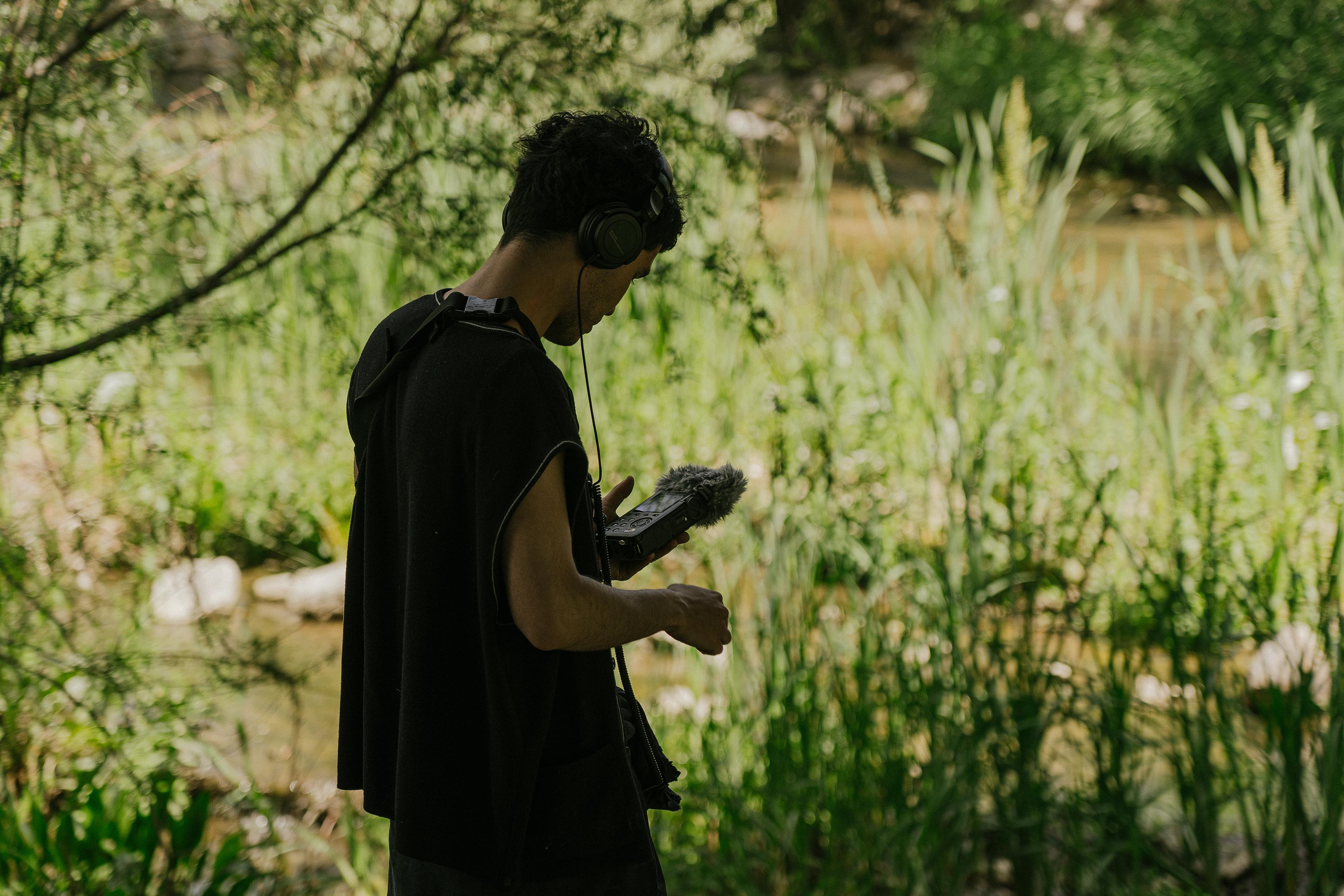
Collective practice Laboratories at the Manzanares river during the PIP 2023 second In-person Encounter. Photo by María Eugenia Serrano
Collective Sharing
As the program navigates some of the most prominent philosophical and ecological concepts of our delicate, yet fertile times, PIP holds continuous space for participants to share the thoughts and emotions that arise from the theoretical modules. These moments of critical and reflective thought support both personal and artistic growth, fostering a more horizontal and collective learning process. It is important to acknowledge the emotional dimension that accompanies thinking and theorizing.
In addition, the PIP integrates opportunities for participants to present their individual practices and projects, opening pathways for future collaborations and encouraging deeper connections within the group after the program is over.
From virtual dialogues to real encounters: Field trips, laboratories, and collective celebrations
ENCOUNTERS: In-person gatherings in Madrid
During PIP, the Institute for Postnatural Studies hosts two in-person encounters in Madrid aimed at weaving connections between local initiatives and international agents. These gatherings —while optional— are highly encouraged, offering space for embodied learning, collective practice, field visits, and celebration.
The first gathering takes place mid-course, from March 15th to 19th, 2027. During this week, we go on field trips, engage in moments of sharing, and visit cultural institutions and postnatural landscapes around Madrid to elaborate on and embody the course research through personal relationships and interactions.
The program concludes with a second encounter, taking place from June 7th to 12th, 2027. With the guidance of a renowned curator (to be announced), this final gathering is a space to celebrate our collective journey, serving as the foundation for the potential futures unfolding after the program.
Participants assume the transportation and housing costs of these encounters, but our team gladly helps in the organization and arrangement of these matters.
Supported by our cultural partners, the final encounter transforms research into public celebration.
LA CASA ENCENDIDA, INSTITUTIONAL PARTNER, MADRID
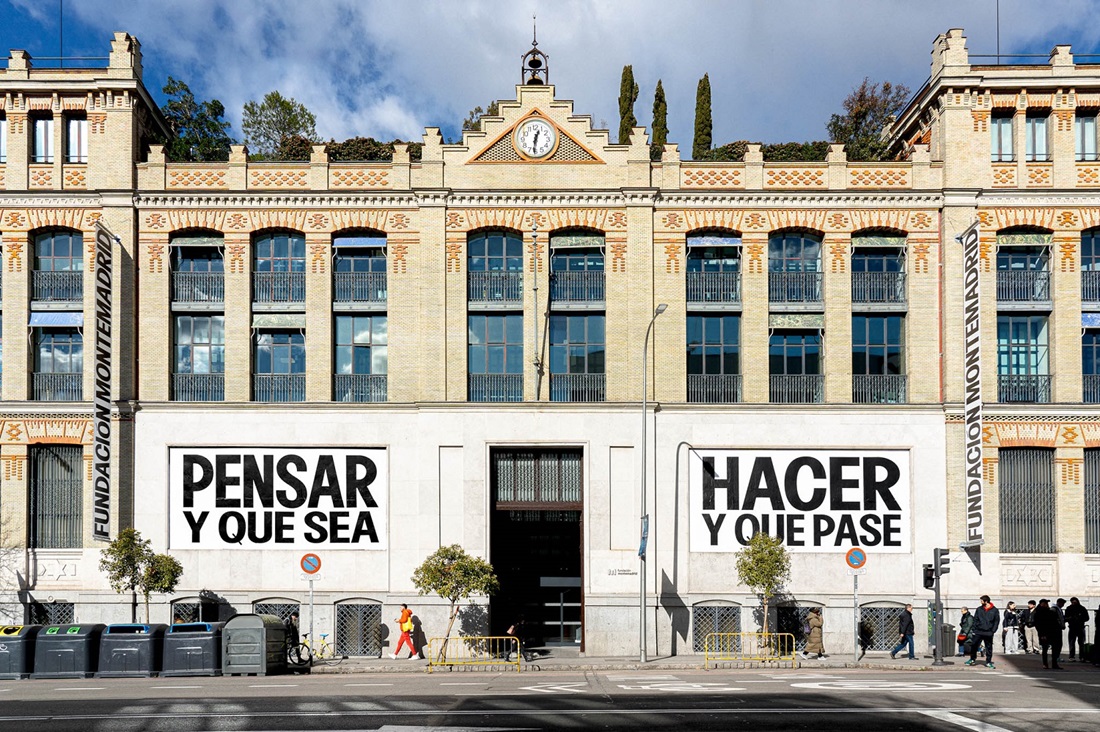
La Casa Encendida, Main Building, Madrid
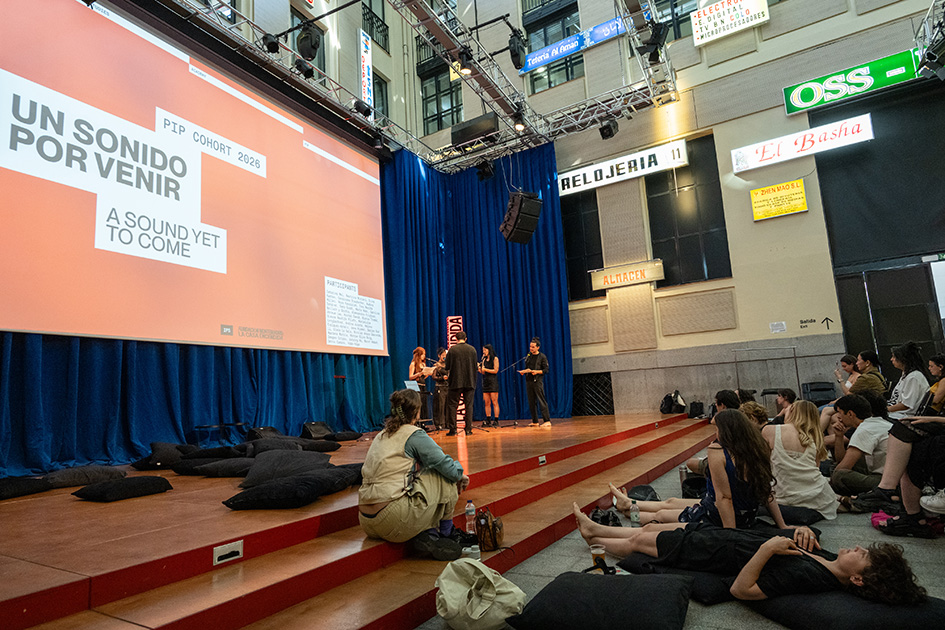
A Sound Yet to Come. Presentation of the 2026 PIP Results.
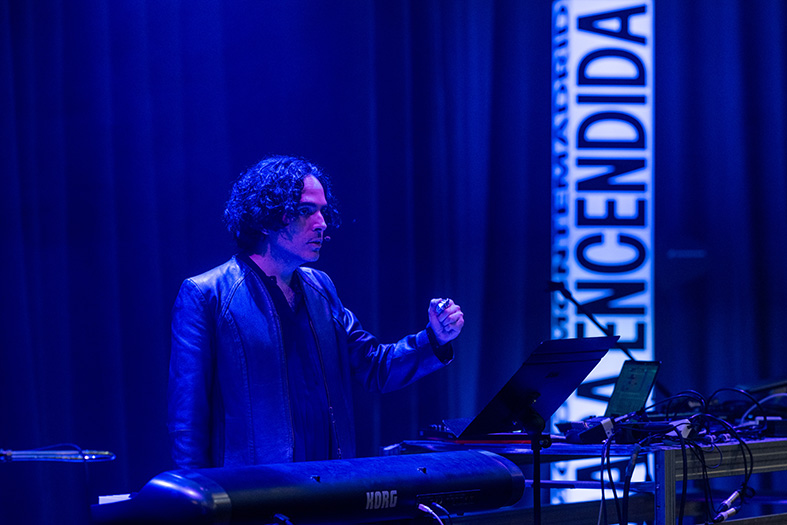
Performance And yet, it's not hopeless by the artist Nahum.
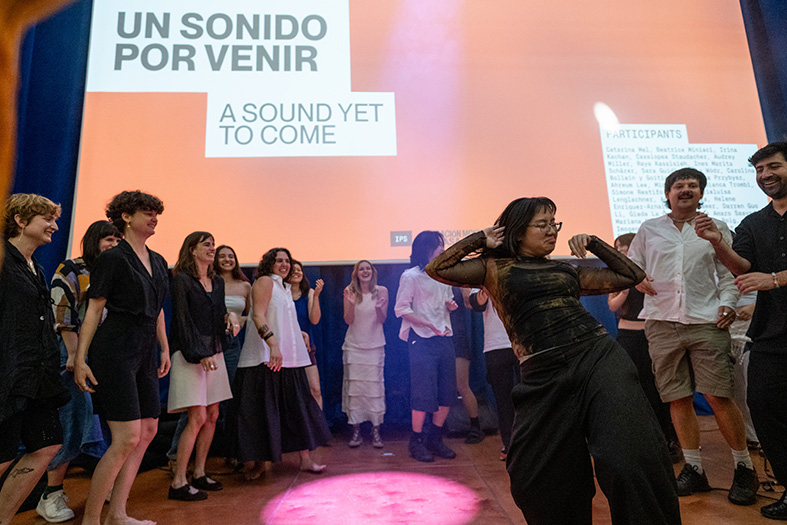
A Sound Yet to Come. Presentation of the 2026 PIP Results.
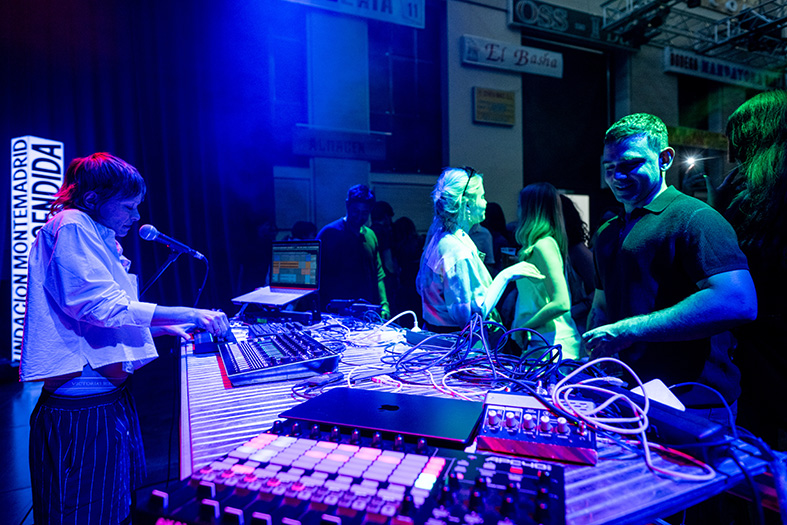
DJ Live Set with Princess Papaya
Institutional partnerships
This year, the PIP counts on the institutional partnerships of La Casa Encendida (LCE), the Goethe-Institut, and the Embassy of the Kingdom of the Netherlands in Spain.
As a key collaborator, LCE will host the program's final encounter, becoming a fundamental ally in shaping and supporting the closing event of this edition. LCE is a vibrant cultural and social center located in the heart of Madrid. Known for its multidisciplinary approach, it offers spaces for contemporary art exhibitions, workshops, performances, and community initiatives. With a strong commitment to social innovation, sustainability, and inclusive education, LCE fosters dialogue and creativity across diverse audiences and disciplines.
The Goethe-Institut provides a full scholarship for a participant, supporting international exchange and enabling broader access to the program. Their partnership strengthens the PIP's commitment to diversity, collaboration, and cross-cultural dialogue.
The Embassy of the Kingdom of the Netherlands in Spain provides a full scholarship for a participant based in the Netherlands, in collaboration with the Mondriaan Fonds, which supports additional travel and accommodation costs. This partnership reflects a shared commitment to fostering international exchange and expanding access to the program for emerging cultural agents.
During the in-person gatherings in Madrid, the PIP provides opportunities for participants to connect with the local independent and institutional cultural scene. Through visits and meetings, these moments help foster networks and exchanges, enriching both individual practices and the collective learning experience of the cohort.
Learn directly from internationally renowned philosophers, artists, curators, and mediators
FACULTY PIP 2027
-
BÁYÒ AKÓMOLÁFÉ

Bayo Akomolafe (Ph.D.), rooted with the Yoruba people in a more-than-human world, is the father to Alethea Aanya and Kyah Jayden Abayomi, the grateful life-partner to Ije, son and brother. A widely celebrated international speaker, posthumanist thinker, poet, teacher, public intellectual, essayist, and author of two books, These Wilds Beyond our Fences: Letters to My Daughter on Humanity's Search for Home (North Atlantic Books) and We Will Tell our Own Story: The Lions of Africa Speak, Bayo Akomolafe is the Founder of The Emergence Network, a planet-wide initiative that seeks to convene communities in new ways in response to the critical, civilizational challenges we face as a species. He is host of the postactivist course/festival/event, 'We Will Dance with Mountains'. He currently lectures at Pacifica Graduate Institute, California. He sits on the Board of many organizations including Science and Non-Duality (US) and Ancient Futures (Australia). In July 2022, Dr. Akomolafe was appointed the inaugural Global Senior Fellow of University of California's (Berkeley) Othering and Belonging Institute. He is also the inaugural Special Fellow of the Schumacher Centre for New Economics and the Inaugural Special Fellow for the Aspen Institute. He has been Fellow for The New Institute in Hamburg, Germany, and Visiting Critic-in-Residence for the Otis College of Art and Design, Los Angeles (2023). He is the recipient of an Honorary Doctorate from the California Institute of Integral Studies (CIIS) and has been Commencement Speaker in two universities convocation events. He is also the recipient of the New Thought Leadership Award 2021 and the Excellence in Ethnocultural Psychotherapy Award by the African Mental Health Summit 2022. In a ceremony in July 2023, the City of Portland (Maine, USA) awarded Dr. Akomolafe with the symbolic 'Key to the City' in recognition of his planet-wide work and achievements. Dr. Akomolafe is a Member of the Club of Rome, a Fellow for the Royal Society of Arts in the UK, and an Ambassador for the Wellbeing Economy Alliance.
-
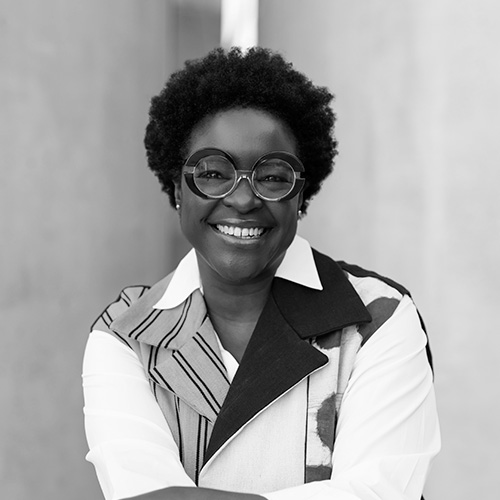
ELVIRA DYANGANI OSE
Élvira Dyangani Ose is Artistic Director of Zeitz MOCAA in Cape Town. She currently also serves as Artistic Director of the 2nd Abu Dhabi Public Art Biennial 2026–2027. She was Director of MACBA, Barcelona, from 2021 to 2026. Previously, she was Director and Chief Curator of The Showroom in London. Dyangani Ose was Curator of GIBCA, the 8th Göteborg International Biennial for Contemporary Art, and Curator of International Art at Tate Modern. Earlier in her career, she worked as a curator at the Centro Atlántico de Arte Moderno in Las Palmas de Gran Canaria and the Centro Andaluz de Arte Contemporáneo in Seville, and served as Artistic Director of the 2nd Rencontres Picha Biennale in Lubumbashi.Multidisciplinary in approach, her curatorial projects explore the narration of history as a collective experience, the ways in which public space is intervened in, and the recovery of non-Western narratives and epistemologies. Her projects include Proyectar un Planeta Negro: El Arte y la Cultura de Panáfrica (2024–26); A Story Within a Story… (2015); Ibrahim El-Salahi: A Visionary Modernist (2013); Carrie Mae Weems: Social Studies (2010); and Olvida Quien Soy/Erase Me From Who I Am (2006).A specialist in contemporary African art, she has led seminars and participated in conferences on contemporary African artistic production and culture. She is a doctoral candidate in Art History and Visual Studies at Cornell University in New York. She holds an Advanced Diploma in History and Theory of Architecture from the Universitat Politècnica de Catalunya and a degree in Art History from the Universitat Autònoma de Barcelona. Most recently, she was a Visiting Professor in Catalan Studies, an initiative organised by the Institut Ramon Llull and the Center for European and Mediterranean Studies (CEMS) at New York University.
-
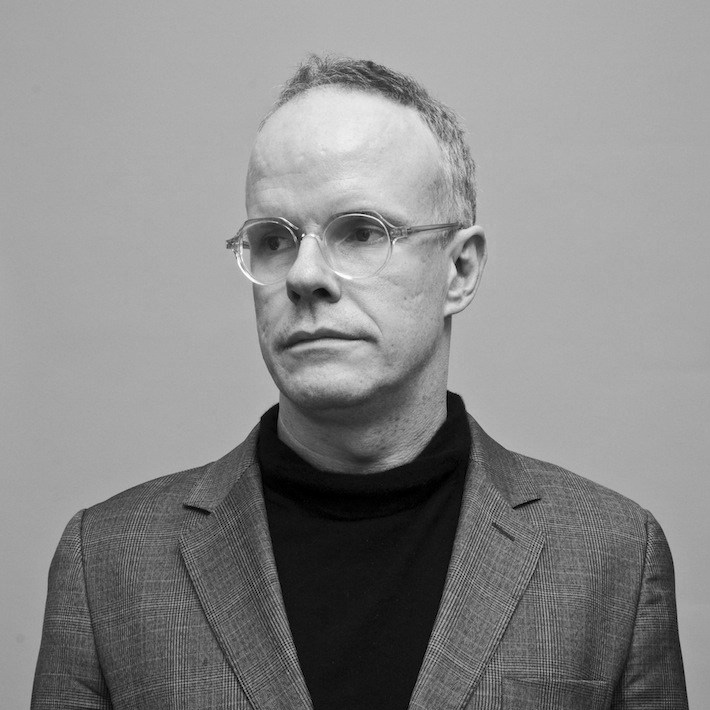
HANS ULRICH OBRIST
Hans Ulrich Obrist is a curator, writer, and editor, and has served as Artistic Director of the Serpentine Galleries in London since 2006. Known for his experimental approach to exhibition-making, he has organized hundreds of exhibitions and projects with artists, architects, writers, scientists, and thinkers worldwide. His practice emphasizes dialogue, research, and long-term collaboration, and includes his influential series of interviews with artists and cultural figures.
-
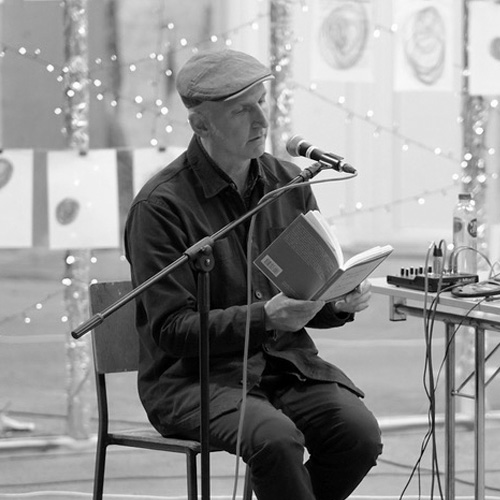
BRANDON LABELLE
Brandon LaBelle is an artist, writer, theorist, and artistic director of The Listening Biennial. His work focuses on questions of agency, community, pirate culture, and poetics, which results in a range of collaborative and extra-institutional initiatives, including Communities in Movement (2019–23), Oficina de Autonomia (2017–), The Living School (2014–16), The Imaginary Republic (2014–19), Dirty Ear Forum (2013–22), Surface Tension (2003–2008), and Beyond Music Sound Festival (1998–2002). In 1995 he founded Errant Bodies Press, an independent publishing project supporting work in sound art and studies, performance and poetics, artistic research and contemporary political thought. His publications include: Poetics of Listening (2025), Dreamtime X (2022), Acoustic Justice (2021), The Other Citizen (2020), Sonic Agency (2018), Lexicon of the Mouth (2014), Diary of an Imaginary Egyptian (2012), Acoustic Territories (2010), and Background Noise (2006).
-
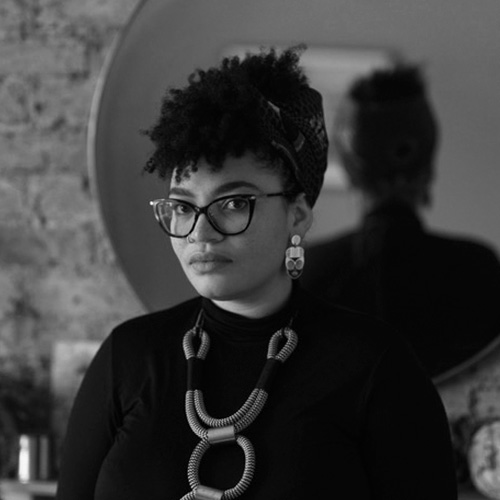
AMA JOSEPHINE BUDGE JOHNSTONE
Dr. Ama Josephine Budge Johnstone is a British-Ghanaian speculative writer, artist, scholar and pleasure activist whose praxis navigates that which she has termed “Intimate Ecologies” to explore Blackness, erotics and the more-than-human in queer and speculative ways toward interspecies futures. Ama’s short stories, art writing and essays have been commissioned and published widely by the likes of Tate Modern, Contemporary&, Aperture, the Independent, Whitechapel, Duke University Press, the Feminist Review and more, and translated into Twi, French, German and Swedish. She has exhibited video and installation work internationally, was the 2020-22 Local, International and Planetary Fictions Fellow with Frame Contemporary Art Finland and EVA International (Ireland); was selected for the 2023 Postnatural Independent Programme (Madrid); the 2024 PerforCraze artist residency (Ghana); and the 2020/21 Keith Haring Fellowship in Art and Activism with Bard College (New York). Ama is Course Tutor & Lecturer at University of the Arts London, MFA tutor at the Sandberg Instituut in Amsterdam, and a Research Associate at VIAD (University of Johannesburg). In 2025 she awarded a PhD in Psychosocial Studies without corrections from Birkbeck University of London and is currently working on her first novel, a speculative meditation on sentient trees, queer erotics and isolation, which was shortlisted for the 2023 Future Worlds Prize for Fantasy & Science Fiction Writers of Colour.
-
SCHOOL OF COMMONS (LED BY GABRIEL HENSCHE)
School of Commons (SoC) (https://www.schoolofcommons.org/) is an international, community-based, hybrid peer learning initiative that was developed at the Zurich University of the Arts (ZHdK). The learning environment of SoC is recognised as a hub for transdisciplinary and transcultural learning and for the creation of alternative forms of knowledge, helping to shape pedagogical approaches in the educational landscape both locally and globally. SoC is dedicated to the development and testing of self-organised knowledge production and peer learning through commoning methods and practices. Since its foundation in 2017, 157 projects and a self-organised alumn* network of over 350 members across six continents that have been supported through SoC. The content and focus of the SoC programme and learning environment is not developed top-down, but is largely shaped by the participants. The ten-month peer learning programmebrings together participants from both theoretical and practical backgrounds, spanning diverse disciplines, countries, and contexts. The session will be facilitated by Gabriel Hensche, who oversees SoC’s Peer Leaning Program since 2022. Gabriel is an artist and educator based in Berlin, working with moving image, performance and constructed situations that explore community, co-creation and intimacy in the face of current technological developments. As Managing Director he helped establish Campus Gegenwart (2017-2022), a transdisciplinary centre at the Stuttgart State University of Music and Performing Arts, teachingmultidisciplinary student groups across four years. In 2024 he co-founded the University of Tiny Moments, a community learning initiative at the Casino for Social Medicine, Berlin.
-
SAMANEH MOAFI
Dr Samaneh Moafi is a spatial investigator and the Assistant Director of Research at Forensic Architecture (FA), a multidisciplinary research team based at Goldsmiths, University of London. Since 2016 and over the course of a decade, Samaneh has contributed to the development of FA's bespoke research methods and led over two dozen international investigations concerning the intersection of environmental harm, colonial and corporate violence. She earned her PhD in 2018 from the Architectural Association (AA), with a thesis on Home Rebellion, the contemporary history of state-initiated mass housing in Iran and the architecture of shared practices of resistance. She is on the board of trustees for The Mosaic Room, a contemporary arts space focused on the Middle East and a 2026-7 Geddes Visiting Fellow at the Edinburgh School of Architecture.
-
JAMES BRIDLE
James Bridle is a writer, artist, carpenter and technologist. Their artworks have been commissioned by galleries and institutions and exhibited worldwide and online. Their writing has appeared in magazines and newspapers including Wired, the Atlantic, the New Statesman, the Guardian, and the Financial Times. They are the author of 'New Dark Age' (2018) and 'Ways of Being' (2022), and they wrote and presented "New Ways of Seeing" for BBC Radio 4 in 2019. Their work can be found at http://jamesbridle.com.
-
EARSHOT / LAWRENCE ABU HAMDAN & CALINE MATAR
Earshot is the world’s first non-profit organisation using sound to defend human and environmental rights. Building on over a decade of research and advocacy, it transforms sound into a tool of justice, treating audio as both evidence of violence and a means of control.In under three years, Earshot’s investigations have informed reporting by more than 30 major media outlets, including the BBC, Al Jazeera, The Guardian and The Washington Post, and supported advocacy by organisations such as Amnesty International and Human Rights Watch. Through original investigations and collaborations with journalists, legal teams and human rights organisations, Earshot produces expert audio evidence that strengthens demands for accountability.
-
JOSÉ ESPARZA CHONG CUY
José Esparza Chong Cuy is a curator, writer, editor, and architect born in Mexico and based in New York. Since 2018, he has served as Executive Director and Chief Curator of Storefront for Art and Architecture. His practice explores the intersections of contemporary art, architecture, public life, and the built environment. Previously, he was Associate Curator at the Museum of Contemporary Art Chicago and Museo Jumex, and co-curator of the 2013 Lisbon Architecture Triennale. He has curated exhibitions and projects internationally, including Lina Bo Bardi: Habitat, and holds an MS in Critical, Curatorial, and Conceptual Practices in Architecture from Columbia University. In 2026, he curated the Kosovo Pavilion at the 61st Venice Biennale.
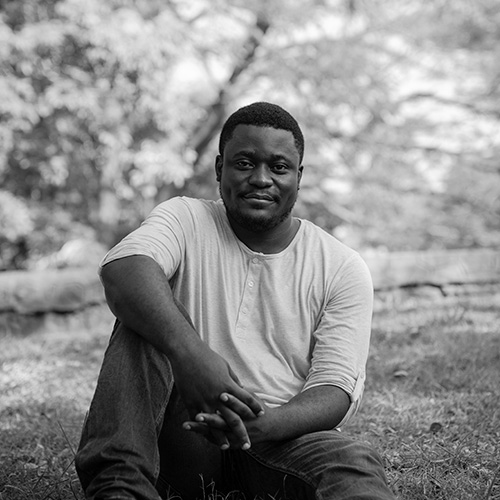
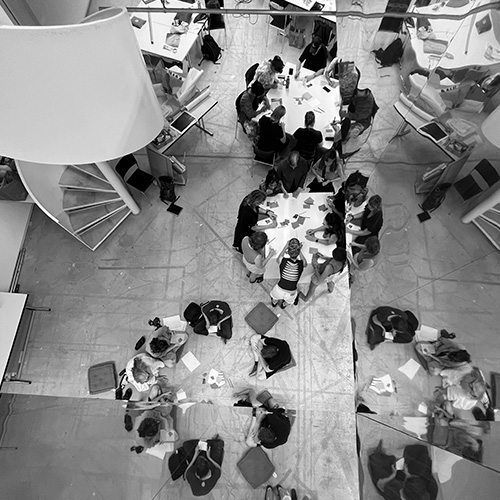
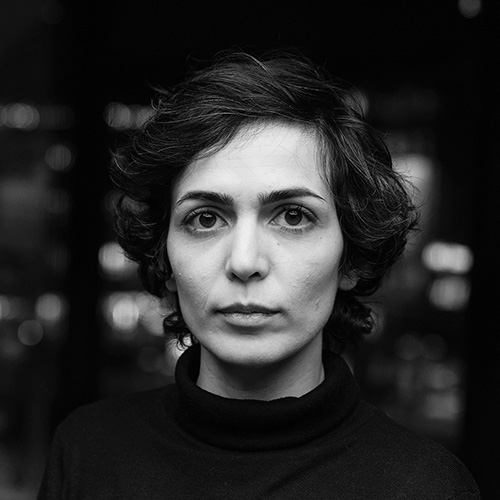
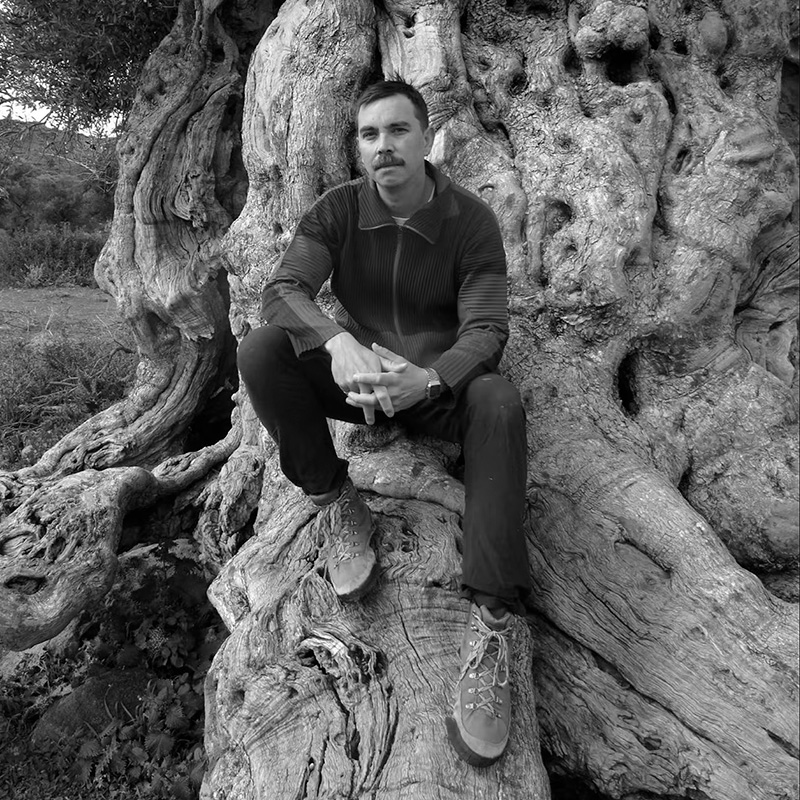
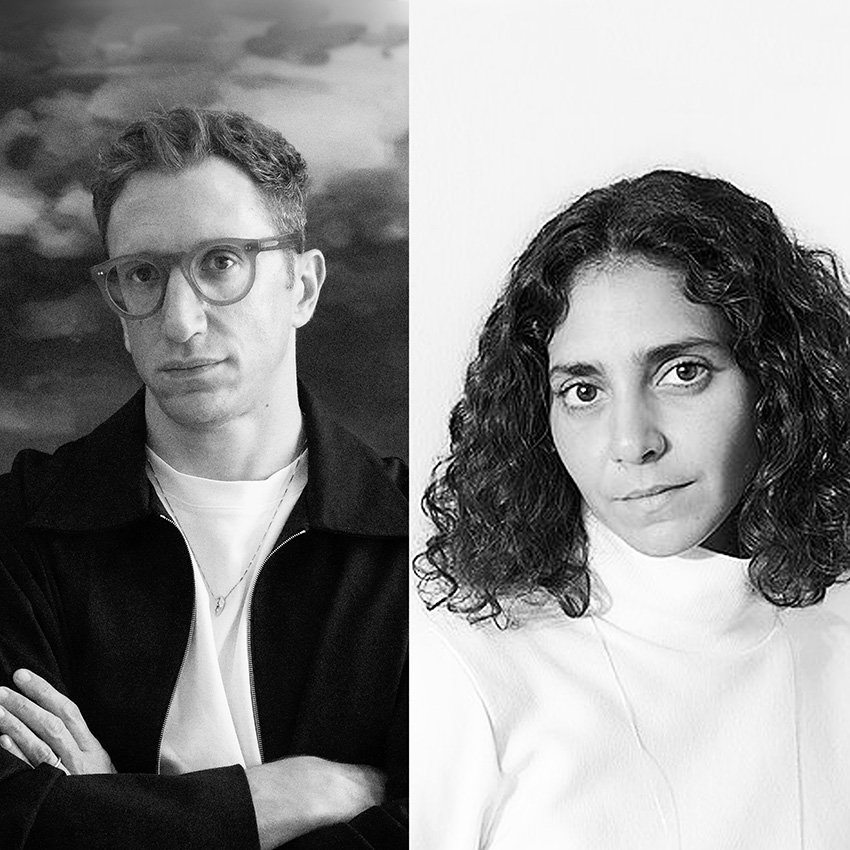
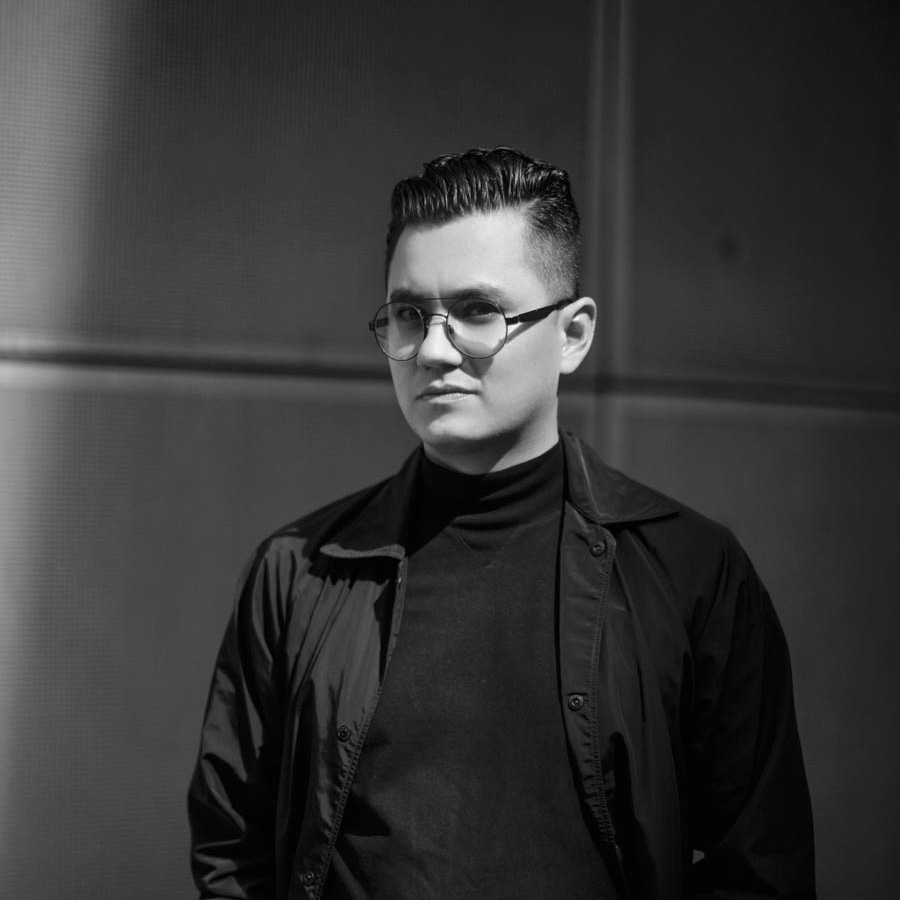
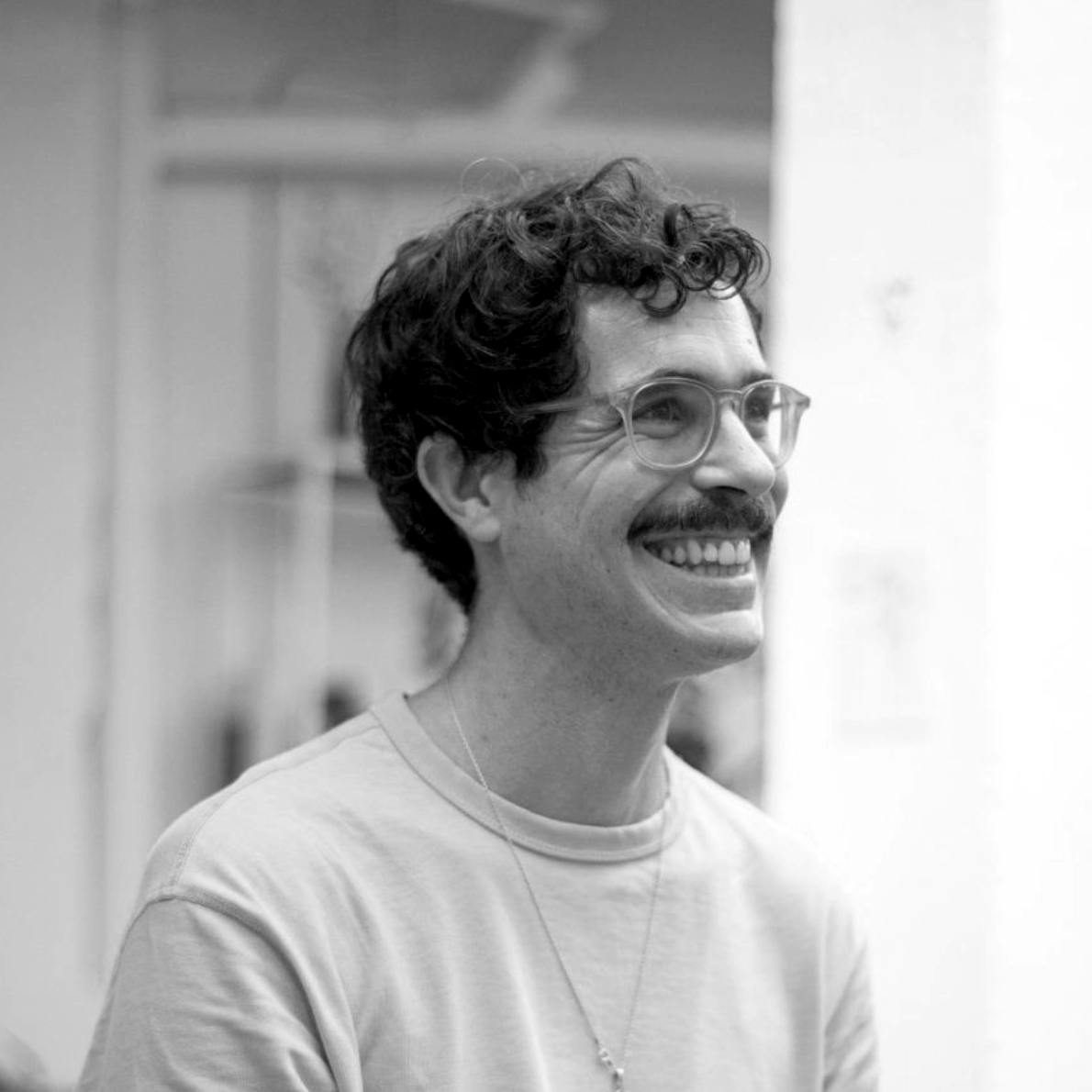
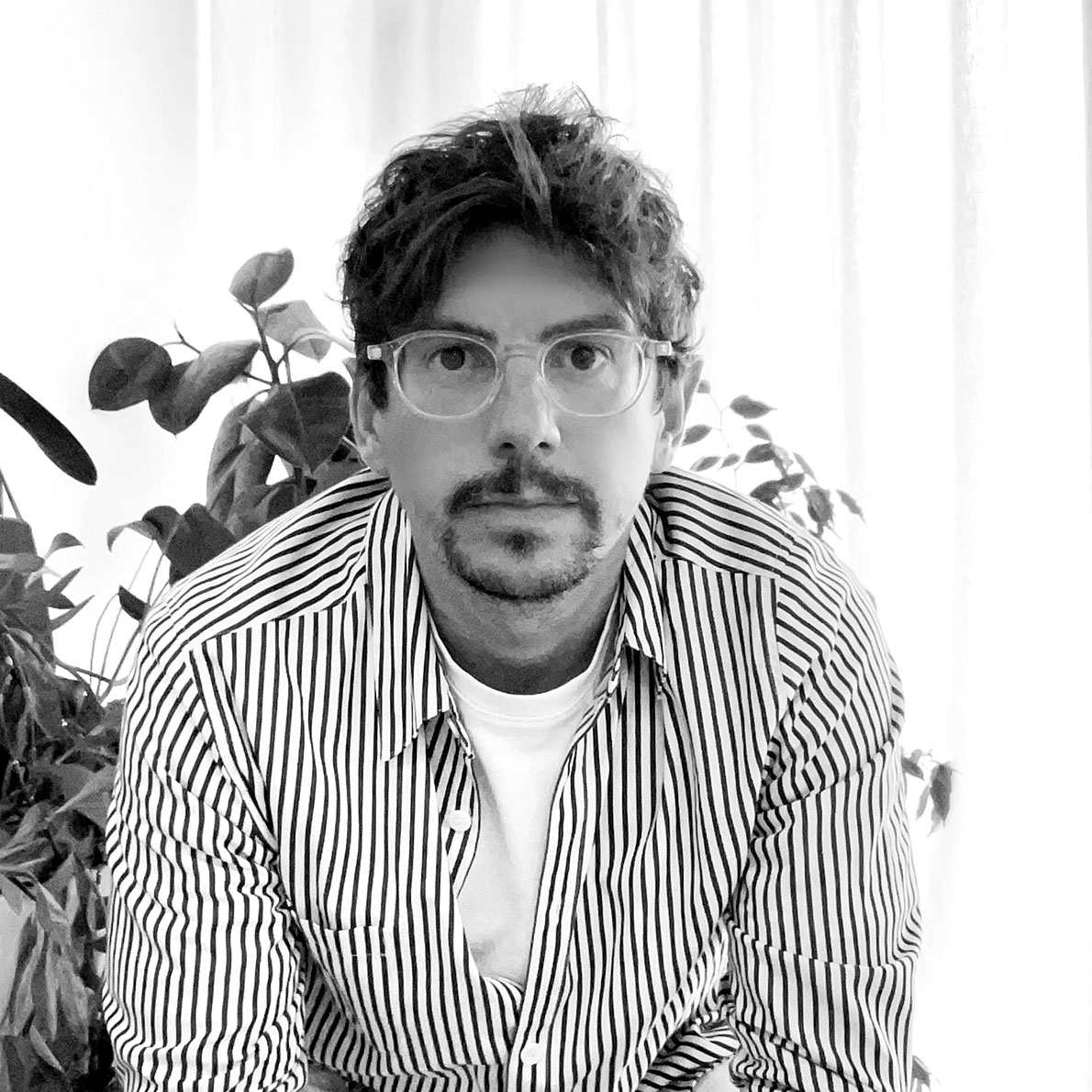
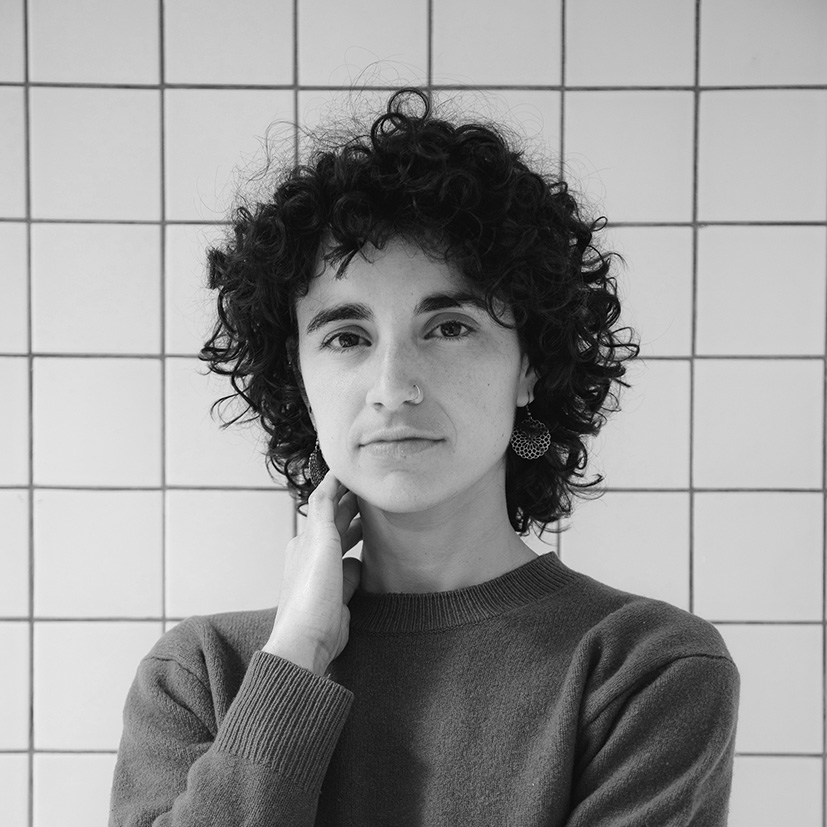
IPS FACULTY
-
YURI TUMA
Yuri Tuma (1983, Brazil) is Co-Director and Faculty of PIP. He is a multidisciplinary artist based in Madrid whose work explores sonic and queer ecologies through collective practices, sound art, installation, and performance. His practice challenges the human/animal divide imposed by science and Western thought, using sound and collaboration to imagine more interconnected futures. In 2020, he co-founded the Institute for Postnatural Studies (IPS), a center for artistic experimentation from which to explore and problematize postnature as a framework for contemporary creation.
-
GABRIEL ALONSO
Gabriel Alonso is Co-Director and Faculty of PIP. Born in Madrid, he is an artist and researcher, trained between the ETSAM (Madrid), the Technische Universität (Berlin), and Columbia University in New York at the MS-CCCP, where he graduated with honors in 2018. In his works, through various formats such as installation, sculpture, photography, or video, he investigates the contemporary relationships between fiction and materiality, to blur the binomials between the real and the imagined, between the natural and the cultural. In 2020 he founded the Institute of Postnatural Studies.
-
ELENA BREA SANDÍN
Elena Brea Sandín is a multidisciplinary artist and cultural mediator from Madrid. She graduated in European Social and Political Studies, specialising in Philosophy, at University College London and studied Physical Theatre at RESAD in Madrid. She also trained in Contemporary Dance in Danscentrumjette, Brussels. Her practice revolves strongly around interculturality, movement and participative performing arts. She is part of ARDA, an international performing arts collective which, since 2023, develops projects in the intersections between art and activism. As a cultural mediator, she works with Plataforma BajoTeja, which develops cultural and artistic projects around diversity in-between the rural and the urban, and La Liminal, which promotes a critical approach to the landscapes of Madrid neighbourhoods through urban walks. Since 2023, she also works as Student Coordinator and Mediator for the Postnatural Independent Program.
Overall Format and Calendar
Full term runs from January 18th to June 12th, 2027.
Mostly two online sessions per week, Mondays and Wednesdays from 6 pm to 8 pm (CET). Some weeks have a third session, on Tuesdays, for the Laboratories.
Two in-person gatherings in Madrid: March 15th–19th and June 7th–12th, 2027.
All sessions and lectures are recorded and available online for reference or in case of absence.
Access to digital folders of study materials.
All sessions are in English.
Apply until November 15th — join an international cohort of 30 participants
Submission of applications
Interested applicants must submit the following documentation through the online form:
A written statement on your practice (artistic, theoretical, scientific, pedagogical...) and how it relates to the program, with a maximum length of 500 words.
What you hope to contribute to the cohort and the collective project developed during the program, with a maximum length of 250 words.
Curriculum vitae or short biography.
Link to portfolio, website, or relevant work samples (optional but recommended).
Submissions will be accepted until November 15th, 2026.
FEES
Tuition fee
2,500 € per participant
Includes
Registration, tutorships, an online bibliography, and study materials.
Payment
The fee can be paid in a lump sum or in need-based installments. The first 50% should be paid before the beginning of the course, and the remaining balance within the first two months through direct debit.
Not included
Travel and accommodation expenses for the in-person encounters in Madrid are not included.
SCHOLARSHIPS
The Postnatural Independent Program is supported by a network of cultural institutions that share our commitment to accessibility and diversity. These are intended to support applicants facing systemic and economic barriers, including (but not limited to) those affected by their ethnic or national identities, and the geopolitical or economic conditions of their countries of origin or residence. This includes individuals who identify as Black, brown, people of color, Global Majority, mixed-race, or of multiple heritage, and/or who are from the Global South, Latinx communities, or diasporas. We also encourage applications from individuals with disabilities or those experiencing economic hardship due to health conditions or other diversity-related factors.
For the 2027 edition, three types of scholarships are available:
Goethe-Institut Scholarship
Offered in collaboration with the Goethe-Institut Madrid, this scholarship covers the full participation fee and is open to residents of Germany. It also includes accommodation at the Goethe-Institut's residency facilities in Madrid during the in-person encounters (March and June).
More details and application here
Netherlands Embassy Scholarship
Offered in collaboration with the Embassy of the Kingdom of the Netherlands in Spain, this scholarship covers the full participation fee (2,500 €) and is open to residents of the Netherlands who have developed part of their professional career in the country. The selected participant may also apply for additional support from the Mondriaan Fonds to cover travel and accommodation expenses. Foreign residents in the NL must have a residence permit valid beyond June 2027.
More details and application here
IPS Scholarship
As an independent platform, the Institute for Postnatural Studies offers one scholarship, aimed at applicants from the Global South, that covers full tuition. It does not include mobility or accommodation costs, although IPS can provide letters of support or documentation to assist recipients in applying for external funding.
More details and application here
We ask applicants to reflect on their situation and needs before requesting any of the scholarships. No financial documentation is required. Applications will be reviewed confidentially and internally.
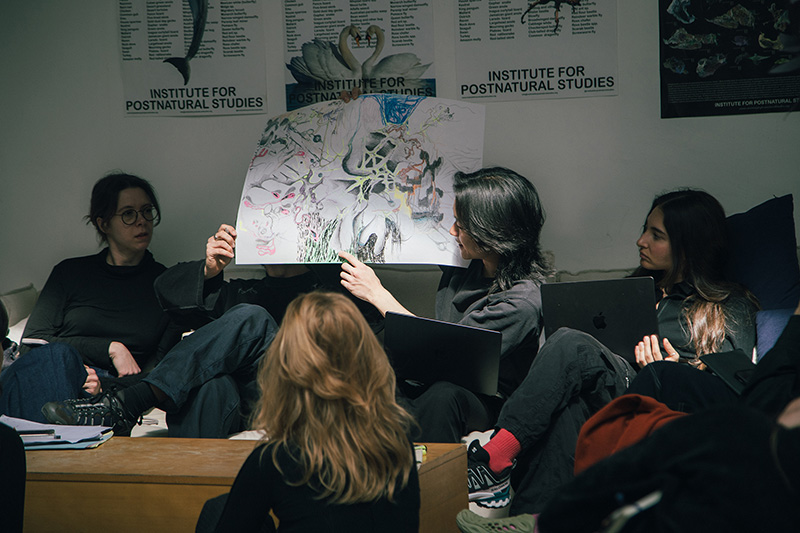
Collective sharing during PIP 2026
Learning as kinship: new voices, new methods, new alliances
Awarded Qualification
End-of-course collective projects will be presented publicly at La Casa Encendida in Madrid. Participants will receive a certificate signed by the Institute for Postnatural Studies. As an independent program, no official qualifications or diplomas are awarded.
Inquiries
pip@instituteforpostnaturalstudies.org
Those wishing to participate in the fifth edition of the Postnatural Independent Program must submit an application using the form before November 15th, 2026, attaching an overview of their practice, a motivation letter, a CV, and a research or artistic portfolio. Optionally, up to two letters of recommendation may be submitted.
We hope to hear from you!
PREVIOUS EDITIONS
PIP 2026 - CLIMATE FICTION AND THE POLITICS OF COLLECTIVE IMAGINATION
The fourth edition of the PIP took climate fiction as its collective ground: not as escapism, but as a political practice. Departing from Jeff VanderMeer's warning that “climate fiction won't save us”, the cohort spent six months testing what imagination can do when it is grounded in history, community, intimacy, listening and care. Alongside Karen Barad, Denise Ferreira da Silva, Báyò Akómoláfé, Chus Martínez, Brigitte Baptiste, Jussi Parikka and Helen Hester, participants developed ecological storytelling rooted in their own research, projects and collaborations, working across situated futurisms and science-fictional lineages to imagine possible pasts, presents and futures. The edition closed publicly at La Casa Encendida in Madrid, where the cohort shared the results of their collective work.
Cohort 2026: Andrea Acosta, Nicolás Amaro Saavedra, Carolina Bollaín y Goitia, Andy Cadia, Derzu Campos, Imogen Cripps, Michał Dawid, Helene Enriquez-Arnaiz, Darren Guo Li, Irina Kachan, Raya Kassisieh, Anna Kramer, Giada La Gala, Ahreum Lee, Marieluisa Lenglachner, Catarina Mel, Audrey Miller, Beatrice Miniaci, Hugo Moreira da Silva Reis (hüga-hüga), Mariana Murcia, Montse Ollés Roig, Aleksandra Przybysz, Simone Restifo Pilato, Sara Guidi, Ines Marita Schärer, Cassiopea Staudacher, Bianca Trombi, Murat Adash, Marta Wódz, Junying Wu.
PIP 2026 - CLIMATE FICTION AND THE POLITICS OF COLLECTIVE IMAGINATION
Final collective projects presentation at La Casa Encendida
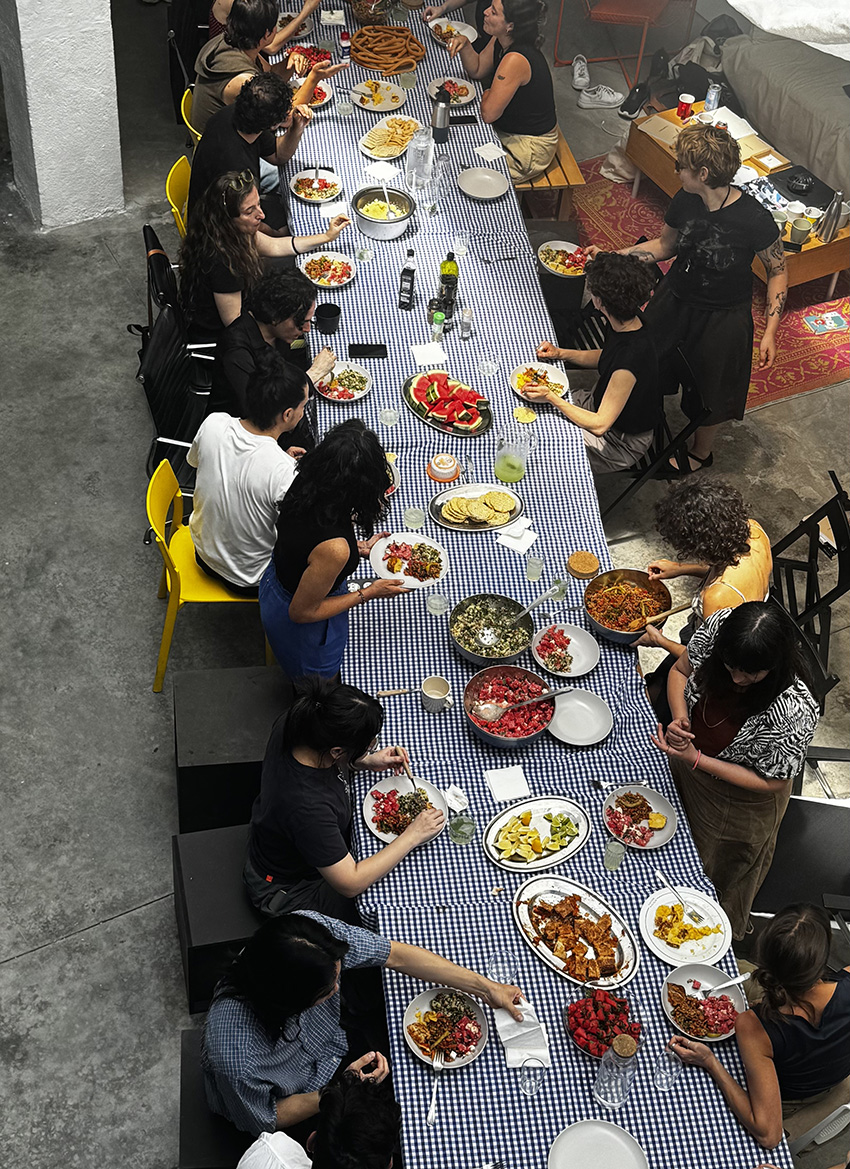
Eating together after a session of collective cooking and meeting each other for the first time during the first in-person encounter.
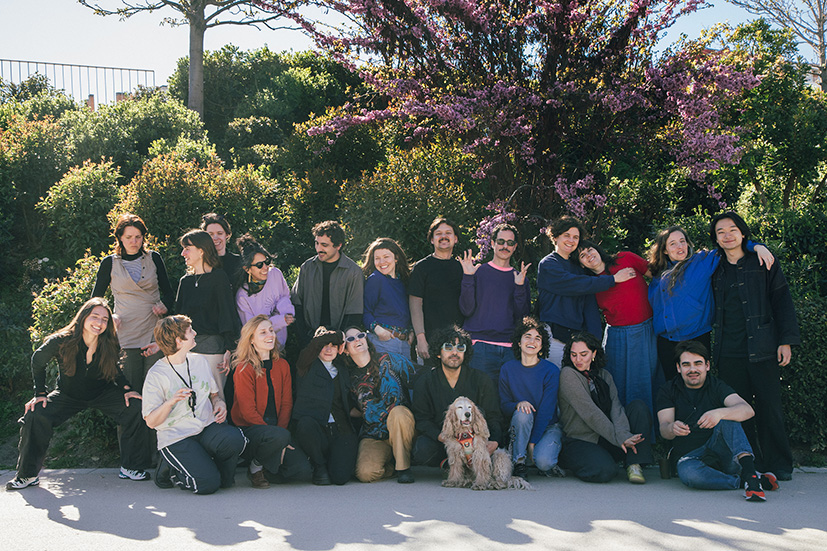
Part of the 2026 Co-hort
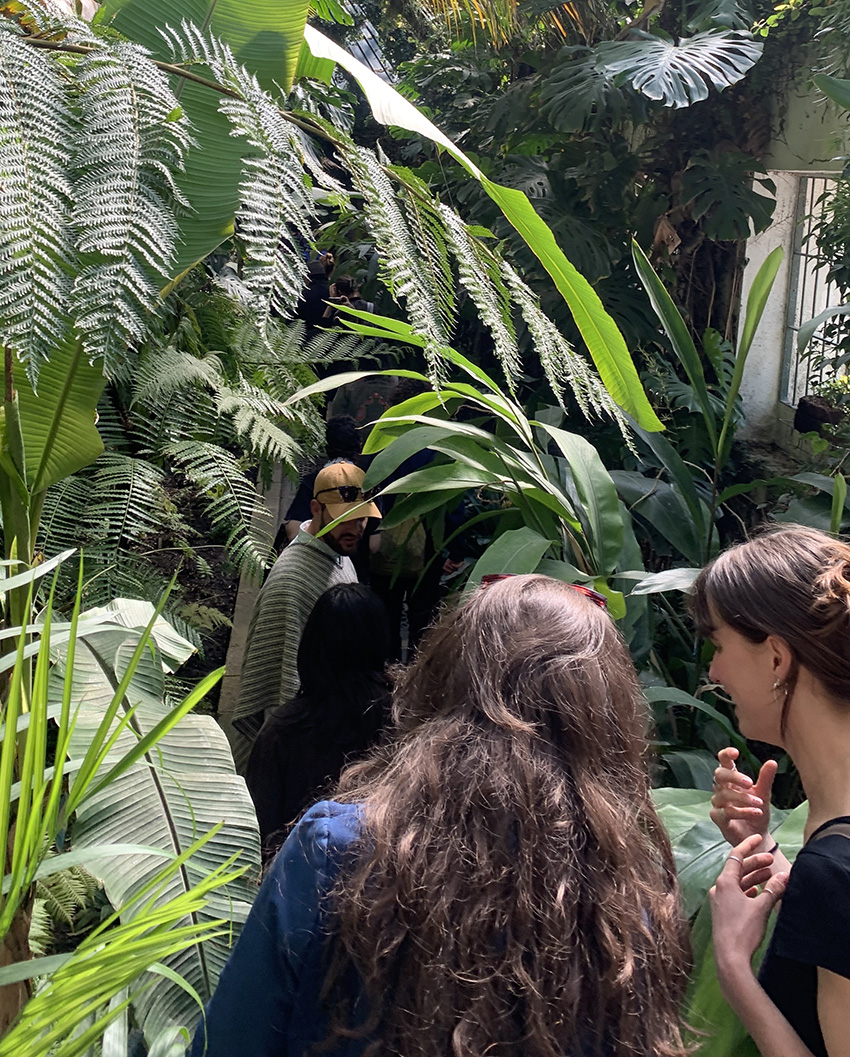
Visint Madrid's Botanical Garden during the second in-person encounter
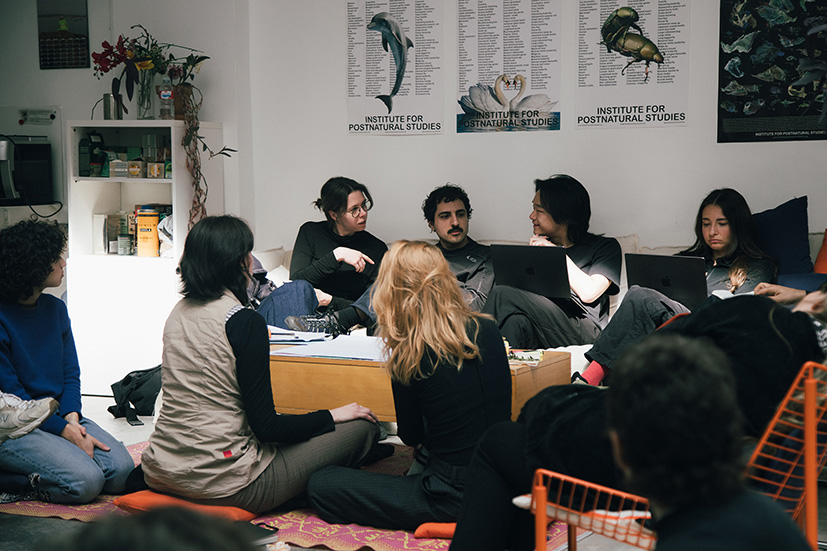
Collective laboratory session in climate fiction
PIP 2025 - TENDER RADIO
In the 2025 edition, Tender Radio came to fruition with seven inaugural podcast episodes, founding the radiophonic tradition of the program. In a brave collective journey of starting something new, the participants of the PIP 2025 took us through amnesic landscapes of grief, clairvoyant and spectral phone calls, becoming one with stromatolites, planetary metabolism, tectonic plate orgies, and invitations to rest as a form of deep transformation. From a conceptual standpoint, we were guided by the complex and multifaceted idea of healing as a hybrid force that combines both the individual and the collective. In a moment when we are faced with continuous wars and genocides, the word “healing” raises many questions about privilege, justice, interspecies coexistence, and planetary siblinghood. You can listen to Tender Radio here.
Cohort 2025: Jan Araújo Fernandes, Inês Barros, Hailey Basiouny, Sabrina Saddul Basilio, Lena Becerra, Irina Anca Bobei, Martina Camani, Helen Yin Chen, Lhotse Collins, Abri de Swardt, Tuçe Erel, Elena Falomo, Anna Ivanova, Yingxi Ji, Tamara Kalo, Anna Karinvinge, Yoojin Lee, Courtney Mackedanz, Fabiana Martinez Pelaez, Maja ∀. Ngom, Ariana Nuala, Joy Pepe, Valerie Prinz, Viktoriia Privalova, Kutlwano Remofilwe Ramphele, Julian Rieken, Sondi Rumohr, Helene Schulze, Oana-Theodora Stefan, Alessandro Tollari, Ali Vanderkruyk, Joanna Wierzbicka, Sara Willa, Javiera Peón-Veiga Petric, Jess Zamora-Turner
PIP 2025 - TENDER RADIO
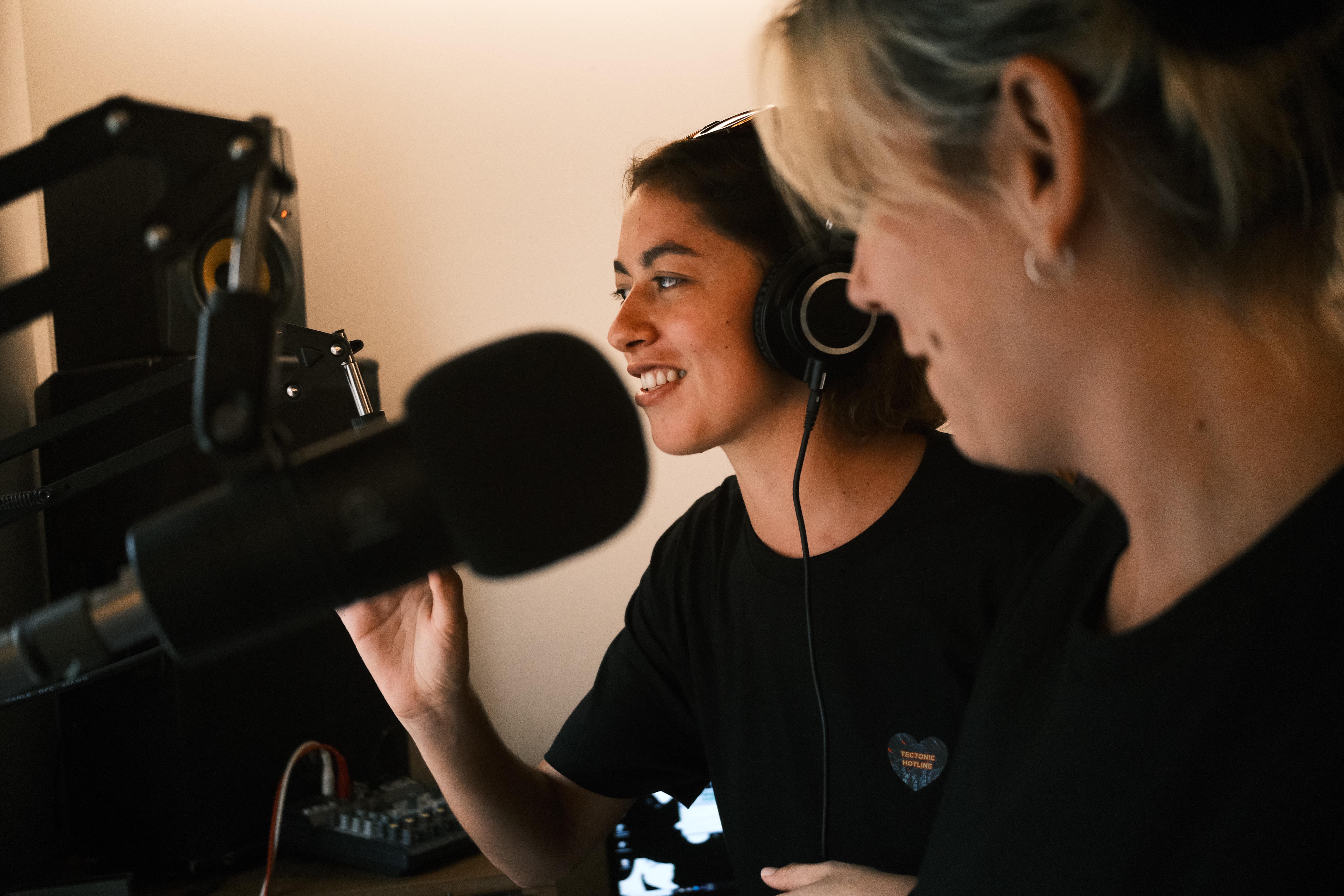
Collective practice at Radio Relativa during the PIP 2025 second In-person Encounter
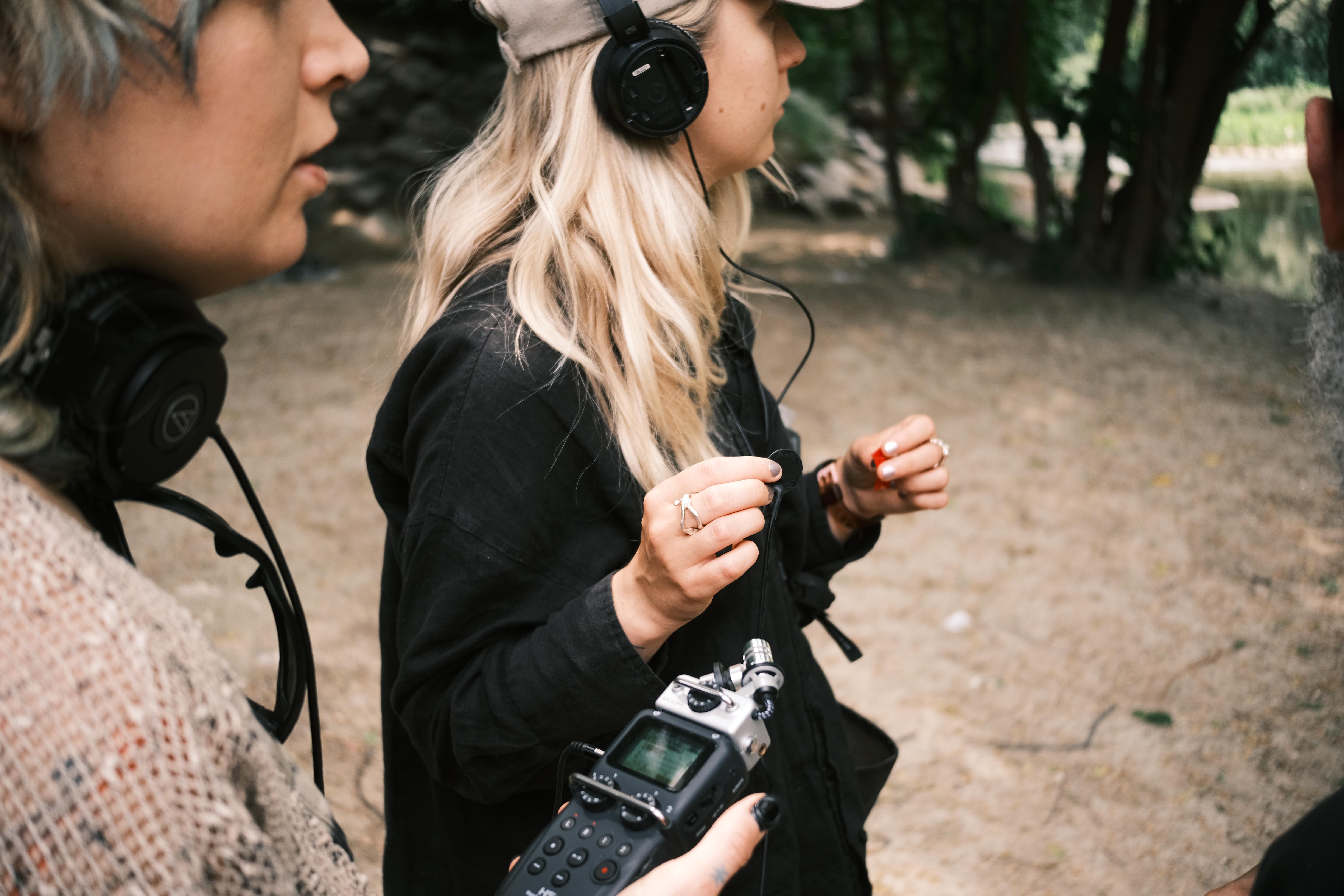
Sensing the Unheard workshop led by Tom Fischer and Simon Williams during the PIP 2025 second In-person Encounter
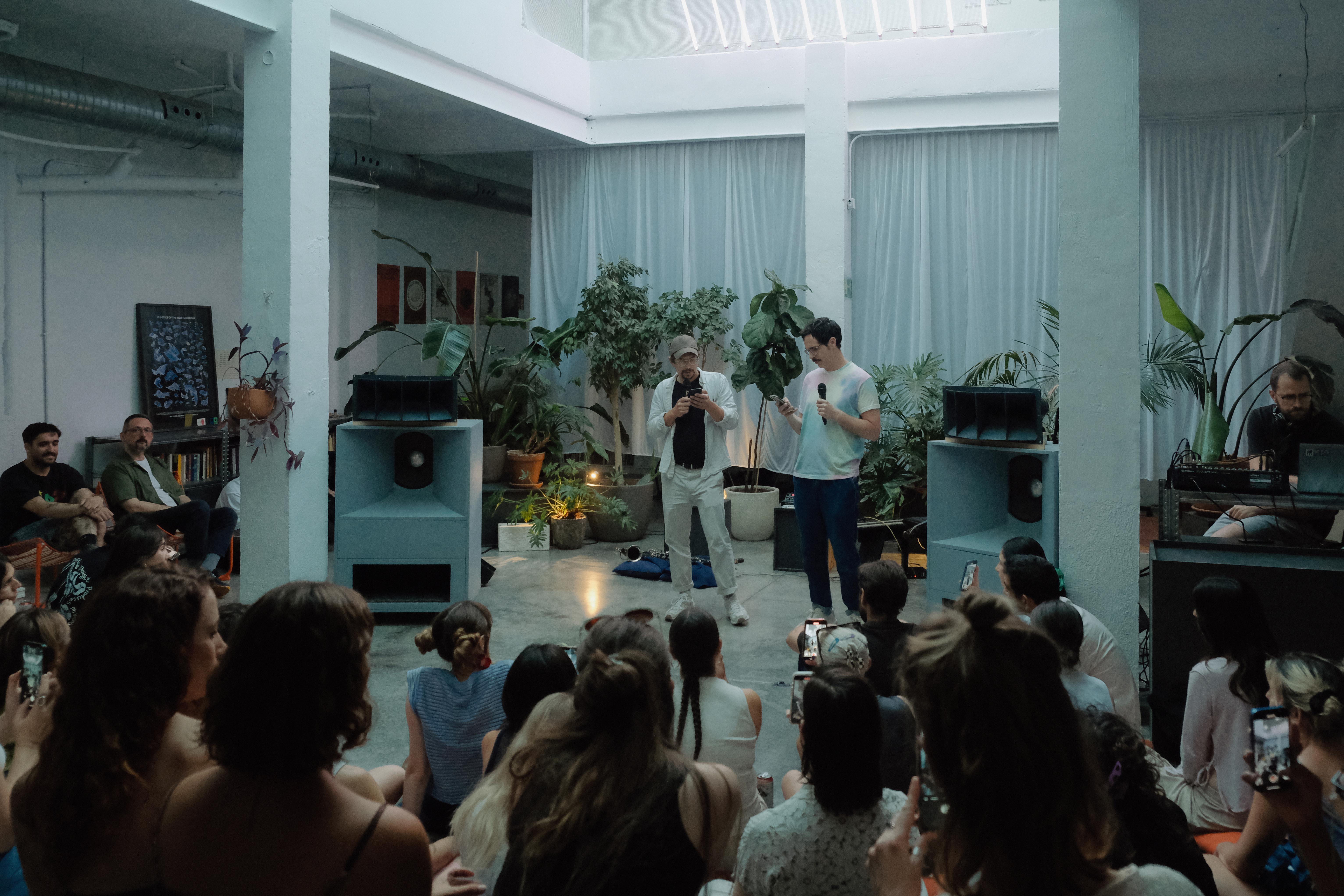
Tender Radio inaugural event at the Institute for Postnatural Studies’ headquarters. Photo by Fer Valenti
PIP 2024 - A BOOK FOR DISSAPEARANCE
The second edition of the PIP led us to question what we understand by “vision” and “image” in the era of artificial intelligence. What does it mean “to see” when the human psychophysiological process of vision is transformed into reading images that are the result of data and parameters? How do the machines around us see? What visual landscapes do they imagine? With the cohort, we critically engaged with these questions to co-edit and co-write a collective editorial project titled A Book for Disappearance. The book focused not only on the disappearance of environments and ecosystems and the loss of biodiversity, but also on our shared loss of privacy and intimacy, of identities and cultures, of lands and territories, and ultimately, of our very future. You can find the publication here.
Cohort 2024: Ishaan Aggarwal, Mio Al-Hashimy, Guillem S. Arquer, Alvaro Azcarraga, Elisa Balmaceda, Abdulla Buhijji, Elizabeth Burmann Littin, Walla Capelobo, Traian Cherecheș, Nadine El Khoury, Veronika Gryshchuk, Jœëllâ Kálâlã, Ryder Kimball, Zoe Keller, Barbara Kiolbassa, Gina Sara Kashi Proenza, Alex Knychalska, Lena Kuzmich, Anna-Katharina Laboissière, Annika Kappner, Paulina Mirowska, Lena Michalik, Shayma Nader, Rithika Pandey, Laura Pante, Florencia Pochinki, Ella Rosenblatt, Yo-E Ryou, Antonine Scali Ringwald, Tom Shepherd-Barron, Natalia Sorzano, Catherine Taft, Grace Leonora Turtle, Joke Van den Heuvel.
PIP 2024 - A BOOK FOR DISSAPEARANCE
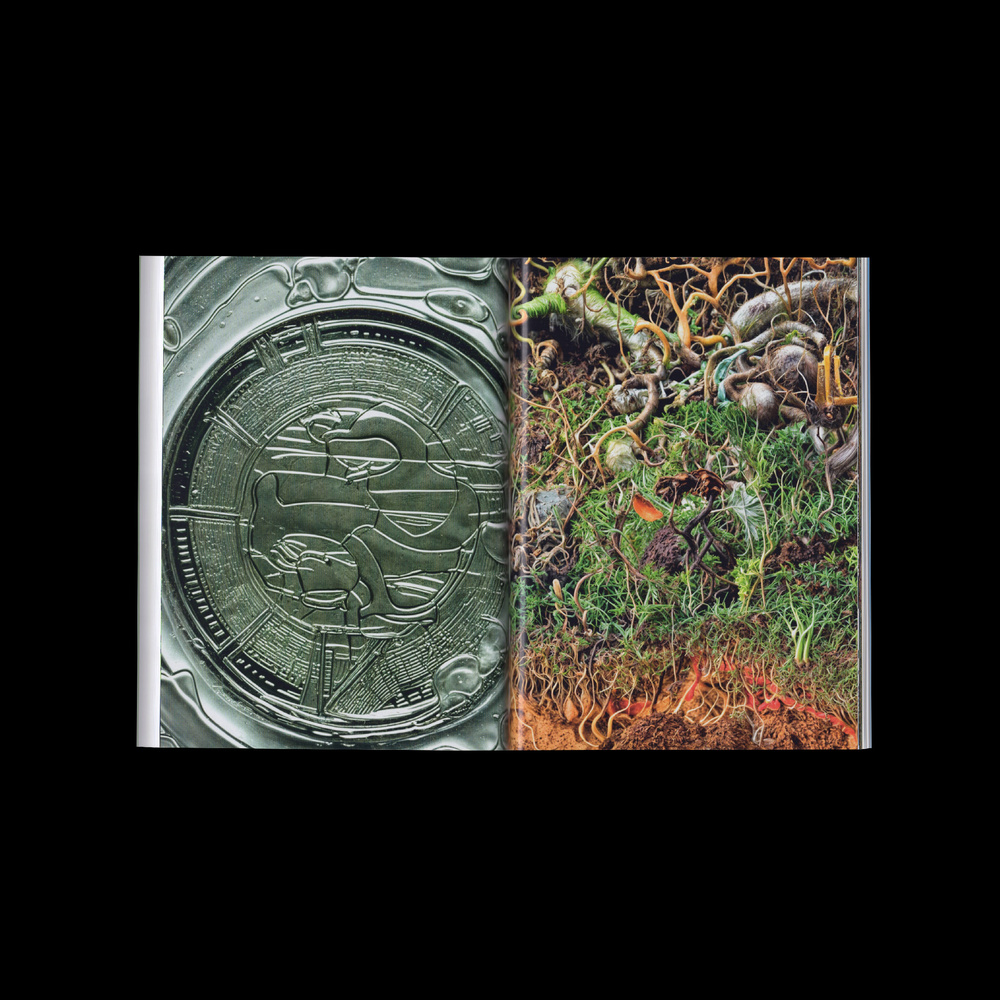
A book for Dissapearance, collective publication
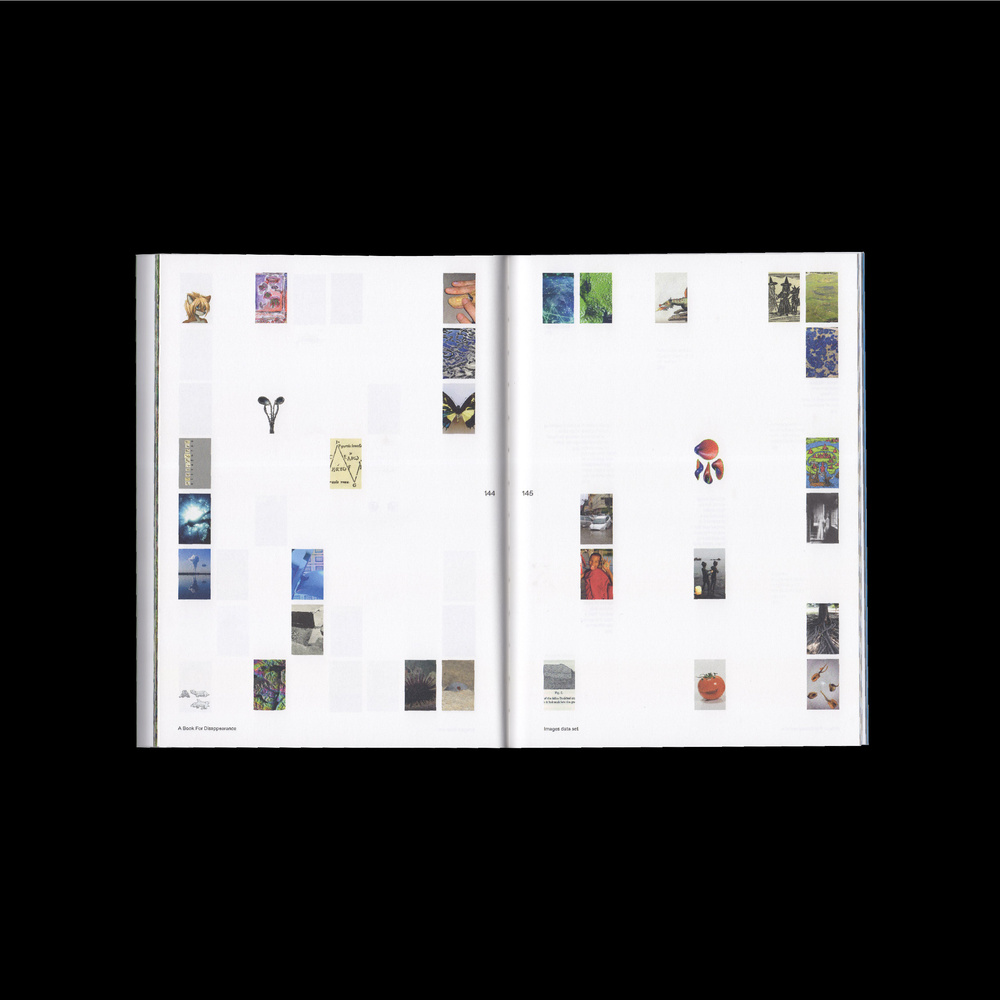
A Book for Dissapearance
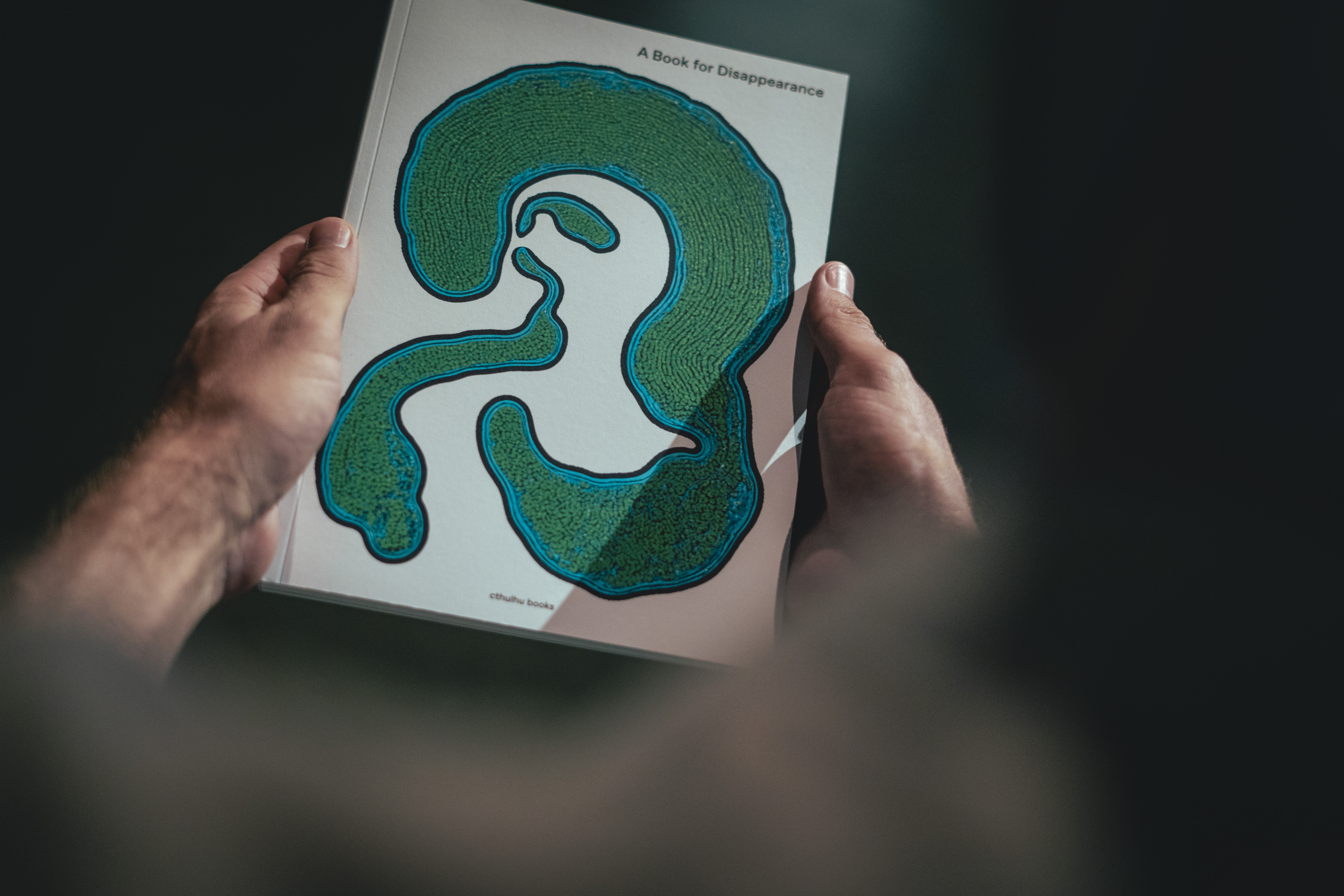
Cover of the collective publication
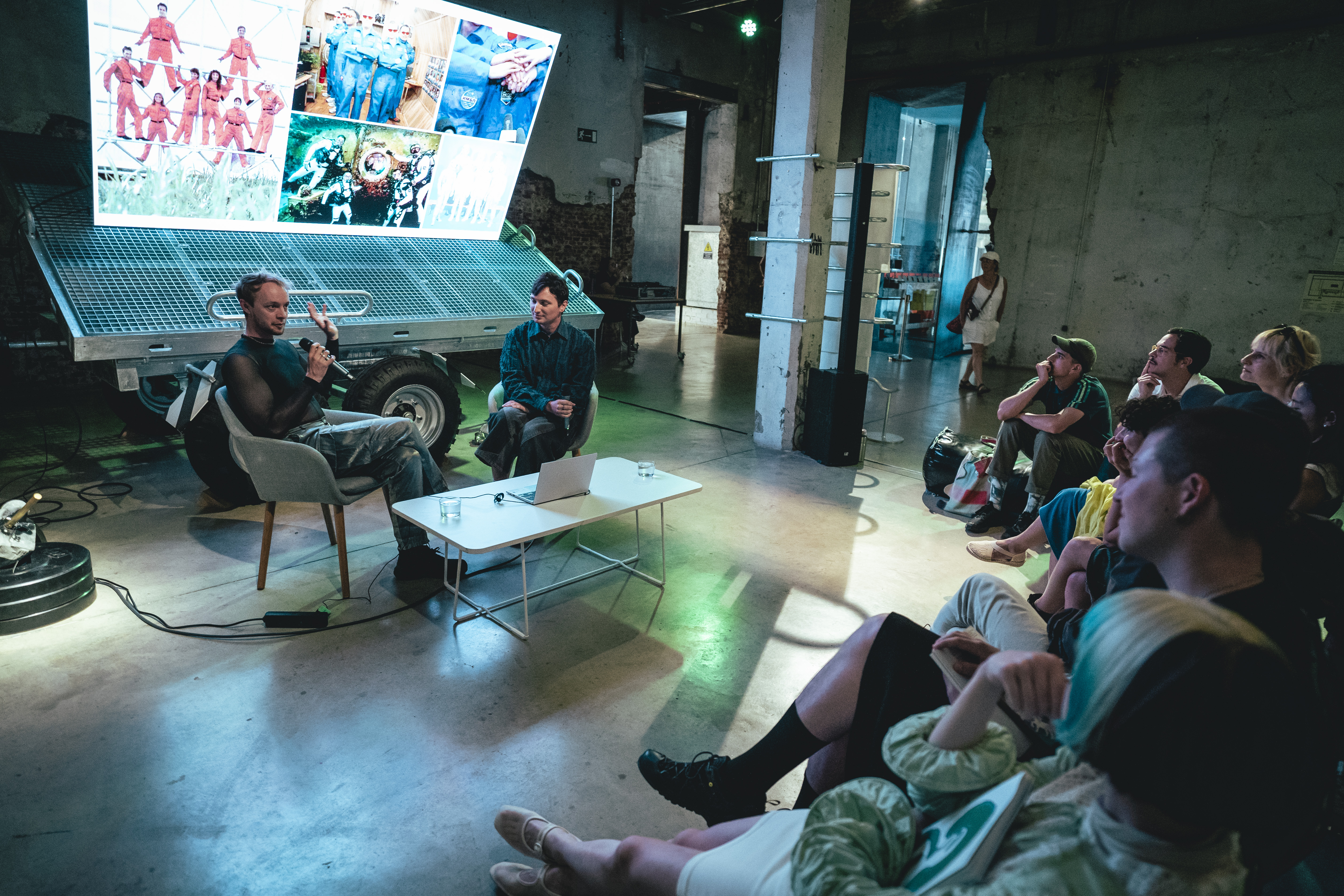
Public presentation at Matadero Madrid with the Insitute of Queer Ecology
PIP 2023 - WE?
As the inaugural edition of the Postnatural Independent Program, it was only natural that our six months together were shaped by opportunities to grow and to reflect on our presence in the world. Inspired by the question “We?”, and collectively with the cohort, we realized that worlding —the practice of enacting worlds to come— must start by rethinking who “we” are, why “we” are (what “we” are supposed to be), where “we” come from, and what new subjectivities other worlds can bring with them. In order to share all of the thoughts, contradictions, frictions, and emotions that emerged from our time together, the cohort co-edited and co-wrote an editorial project with Cthulhu Books that can be downloaded for free here.
Cohort 2023: Aliaskar Abarkas, Sol Archer, Felix Bell, Sara Bonaventura, Madison Bycroft, Diogo da Cruz, Sai Di, Adriana Gallo, Caterina Gobbi, Hannah Hallam-Eames, Ishita Jain, Ama Josephine Buge Johnstone, Noa Wanita Maria Jansma, Andrea Lumpleker, Davide Marcianesi, Matheline Marmy, Lisa Mazenauer, Lindertje Mans, Victoria Muthiani (V for 5 Victoria Muthiani), Ania Mokrzycka, Ana Roman, Ana Rosela del Bosque, Maria Maite Rodriguez, Raju Rage, Kosmas Phan Dinh, Korallia Stergides, Natália Trejbalová, Caroline Ward, Dominika Wasilewska, Lissy Willberg.
PIP 2023 - WE?
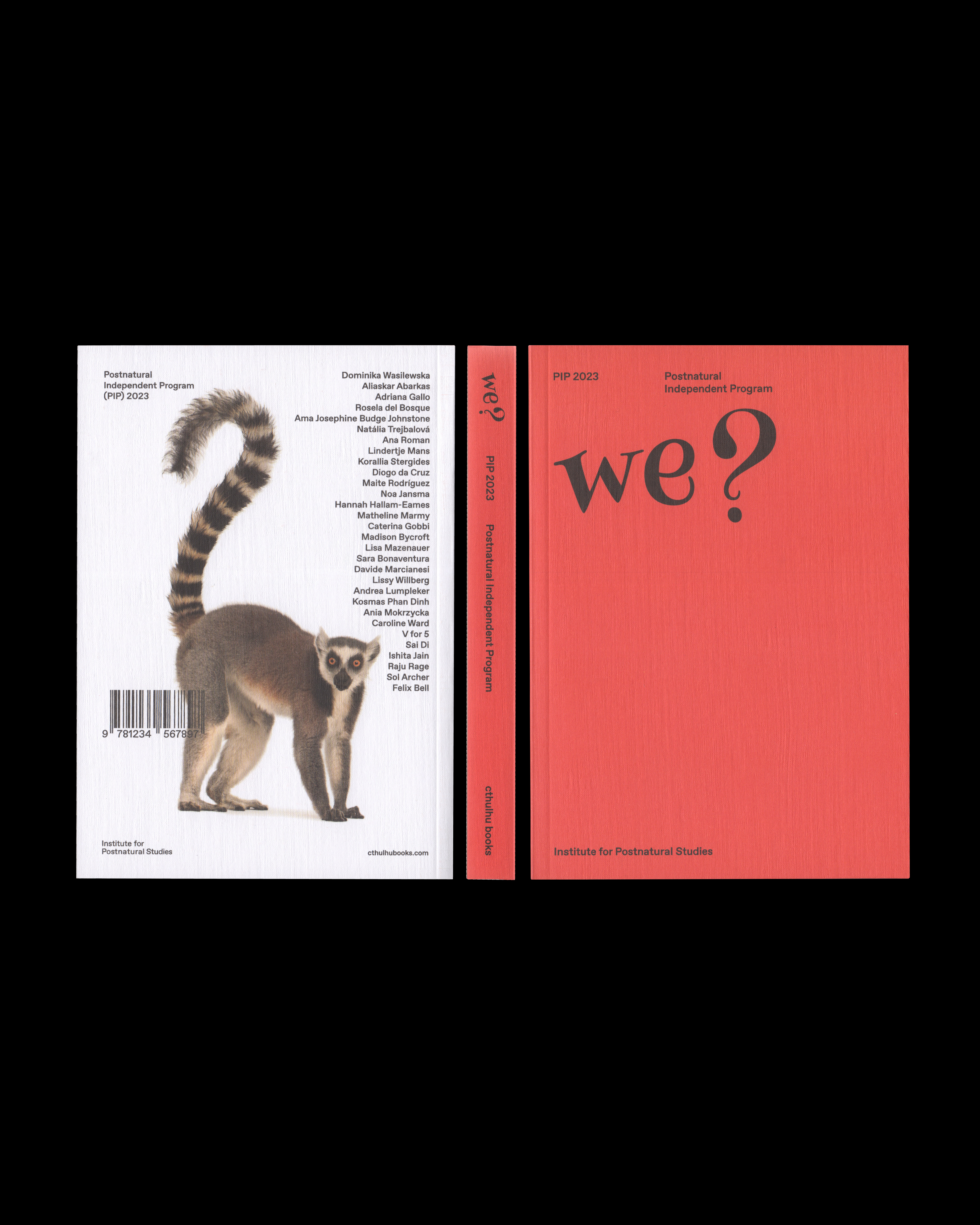
We? Book cover scan
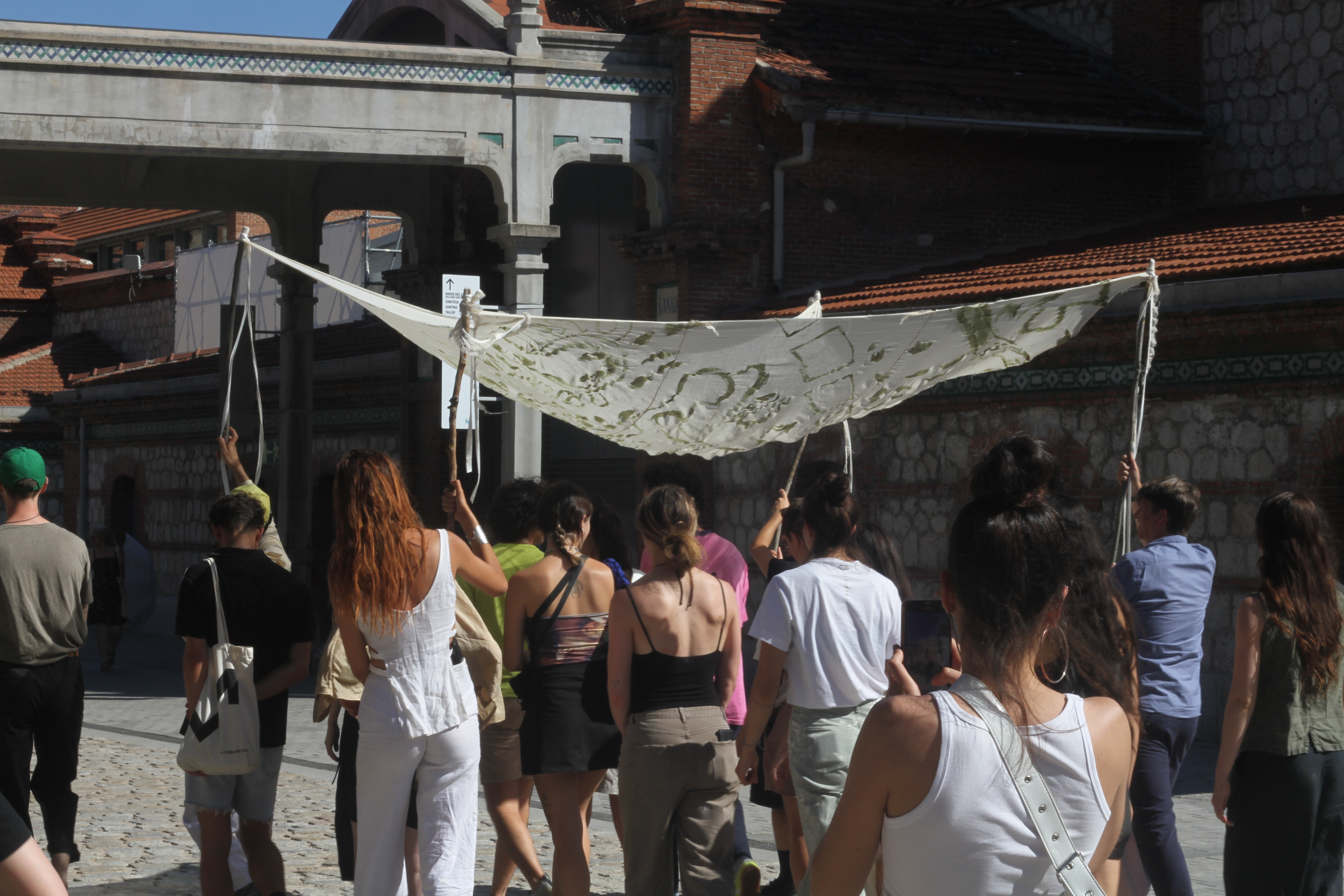
Public Presentation at Matadero Madrid
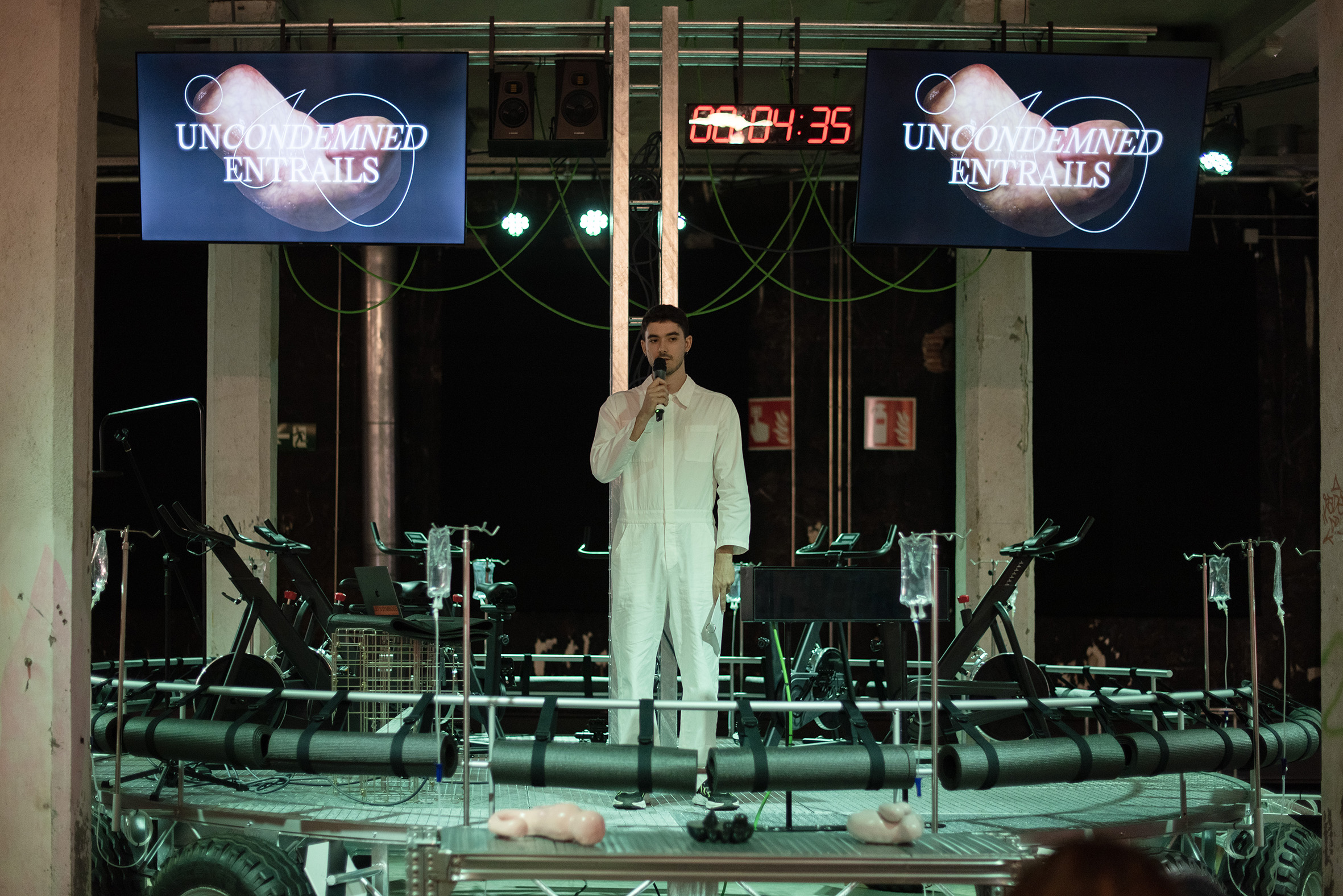
Public Presentation at Matadero Madrid
PIP TEAM
Previous faculty and guests: Ayesha Hameed, Emanuele Coccia, Carmen Lael Hines, Filipa Ramos, Stacy Alaimo, Gesyada Siregar, Institute Of Queer Ecology, Claire Colebrook, Lorenzo Sandoval, Cary Wolfe, Paloma Lomas Contreras, Mary Maggic, Uriel Fogué, Tom Fischer (Action Pyramid), Simon Williams (Sunny Graves), Nicolas Jaar, and Eli Wewentxu.
Gabriel Alonso
Program Co-Director and faculty
Yuri Tuma
Program Co-Director and faculty
Karol Muñozcano
Program Manager & Institutional Relations
Elena Brea Sandín
Student Coordinator & Mediation
Silvia Ribero
Group Facilitation & Care
Sara Hernández Bennaji
Graphic & Visual Designer
FAQs
FREQUENTLY ASKED QUESTIONS
- 01.
- 02.
- 03.
- 04.
- 05.
- 06.
- 07.
- 08.
- 09.
- 10.
- 11.
- 12.
- 13.
- 14.
- 15.
- 16.
- 17.
- 18.